How much does it cost to study in the USA?
Tuition for international students typically ranges from $25,000 to $60,000/year for masters programs at top universities, with living costs adding $15,000–30,000/year depending on city.
Loading NexStudy…
Home to the top-ranked universities with OPT and STEM extensions
Share your phone or email and our counselors will send a country-specific shortlist, visa risk check, and document plan for Indian students.
Free USA shortlist
For Indian students
Home to the top-ranked universities with OPT and STEM extensions
Step-by-step process to get your F-1 Student Visa
Use the current official immigration guidance for USA to check when you can apply and any processing estimate for your application route. We have not verified a current processing time for this summary.
Plan university deadlines and any required pre-application steps separately from the visa decision. Confirm the documents and appointments that apply to your application, and do not rely on a generic preparation buffer or processing estimate as a guaranteed decision date.
| Planning area | What to confirm |
|---|---|
| University arrangements | Confirm offer, acceptance and enrollment deadlines with your institution. |
| Documents and appointments | Check the official requirements and appointment availability for your application. |
| Visa processing | Check any current official estimate, its scope, and when the processing clock starts. |
| Travel and accommodation | Check your visa status and booking cancellation or refund terms before committing. |
Funds must be traceable, sufficient, and consistent with tuition plus living cost requirements.
Your SOP should explain course choice, academic progression, career goals, and India ties.
Names, dates, marksheets, bank letters, and offer details must match across the file.
Students should be able to explain the university, course, budget, and post-study plan clearly.
Average salaries for international graduates in USA
| Role | Average Salary | Growth Signal |
|---|---|---|
| Software Engineer | USD 130,000 | +17% |
| Data Scientist | USD 140,000 | +21% |
| Financial Analyst | USD 95,000 | +9% |
| Product Manager | USD 145,000 | +12% |
| AI/ML Engineer | USD 160,000 | +30% |
| Healthcare Admin | USD 85,000 | +10% |
In most cases, Indian students can work part-time in USA if their student visa permits it. Common student jobs include campus assistant roles, hospitality, retail, tutoring, delivery support, and entry-level tech or admin roles. Students should always follow the work-hour rules printed on their visa conditions.
Part-time work should be treated as support income, not the main funding source. The stronger plan is to show full financial capacity first, then use part-time income for living flexibility, local experience, and networking.
Strong fit for students who combine relevant coursework, internships, portfolio projects, and local networking while studying.
Strong fit for students who combine relevant coursework, internships, portfolio projects, and local networking while studying.
Strong fit for students who combine relevant coursework, internships, portfolio projects, and local networking while studying.
Strong fit for students who combine relevant coursework, internships, portfolio projects, and local networking while studying.
Studying in USA can support long-term settlement only when the student chooses an eligible course, maintains visa compliance, gains relevant work experience, and meets immigration criteria at the time of application. A degree alone should not be treated as a guaranteed PR pathway.
OPT (Optional Practical Training) gives graduates time to gain local work exposure. Students targeting settlement should compare occupation demand, salary thresholds, regional rules, language scores, and work visa conversion routes before choosing a university or city.
Monthly expenses breakdown for international students
| Expense | Estimated Range |
|---|---|
| Rent (1BR City) | USD 1,200-3,000/mo |
| Groceries | USD 250-450/mo |
| Transport | USD 70-130/mo |
| Internet | USD 50-80/mo |
| Dining Out | USD 15-30/meal |
| Health Insurance | USD 1,500-2,500/yr |
| City | Average Rent | Best For |
|---|---|---|
| New York | USD 3,000/mo | Finance, Media, Law |
| San Francisco | USD 2,800/mo | Tech, AI, Startups |
| Boston | USD 2,400/mo | Biotech, Education, Research |
| Los Angeles | USD 2,200/mo | Entertainment, Design |
| Chicago | USD 1,600/mo | Business, Engineering |
Curated awards Indian students commonly shortlist — government, research, and university merit routes. Verify deadlines on the official site.
By U.S. Department of State
By AAUW
By U.S. universities
📍 New York City, United States
The City University of New York (CUNY) is a public university system in New York City, consisting of 25 senior colleges and seven community colleges. It is the largest public university system in the United States, with a diverse student population and a wide range of academic programs. CUNY is known for its commitment to social justice, community engagement, and providing accessible education to all New Yorkers. The university system offers undergraduate, graduate, and professional degree programs, as well as continuing education and workforce development opportunities.
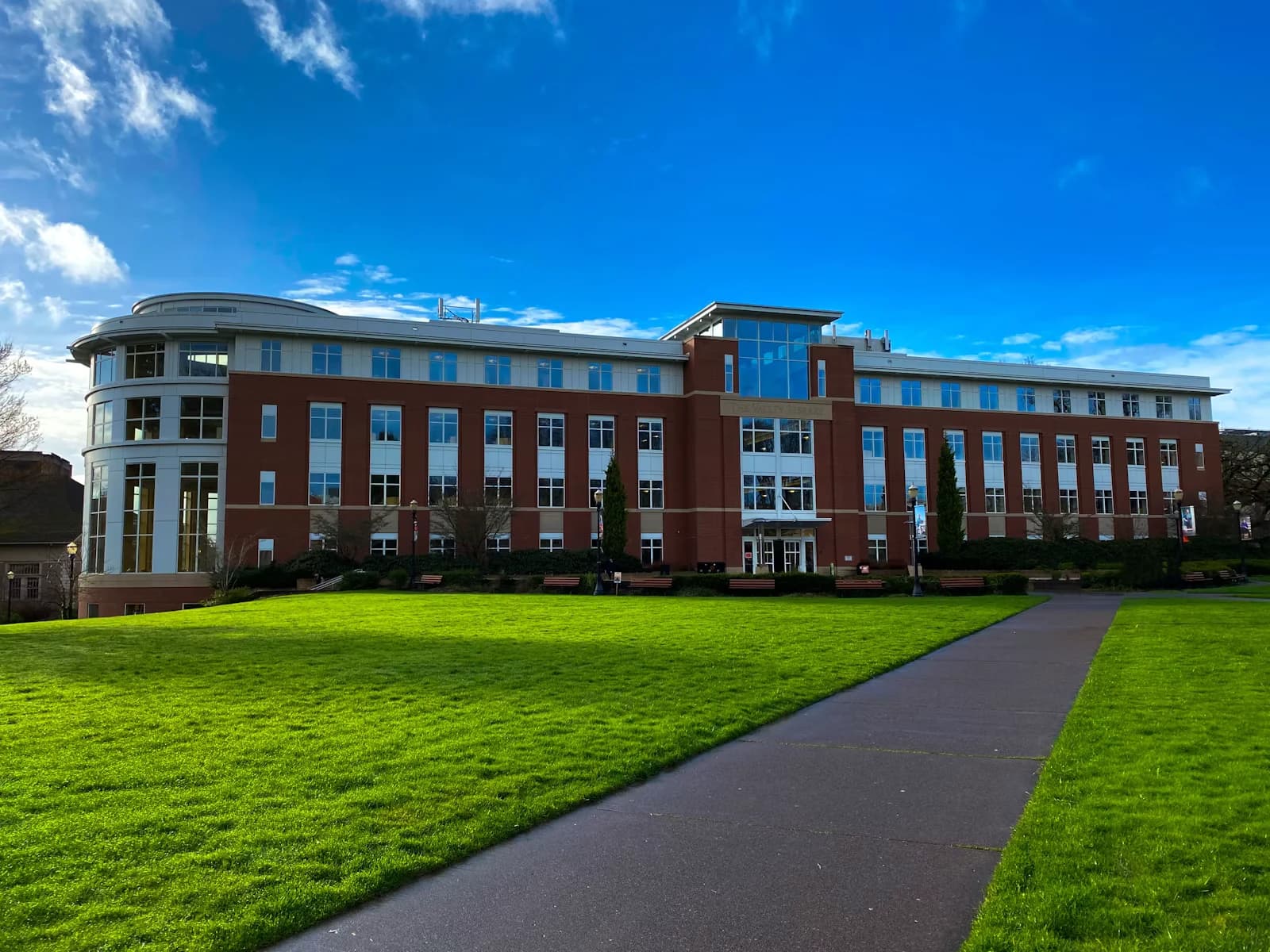
📍 Princeton, United States
ELS Language Centers is a private, non-profit organization that provides English language instruction and cultural exchange programs to international students and professionals. Founded in 1965, the organization has since grown to become a leading provider of language education in the United States, with locations in 14 countries and over 1,000 centers worldwide. ELS Language Centers offers a wide range of programs, including intensive English language courses, academic English programs, professional English programs, and cultural exchange programs. The organization is committed to promoting global understanding and cultural exchange through its language education programs.
📍 Los Angeles, United States
UCLA Extension is the continuing education and professional development division of the University of California, Los Angeles. It offers non-degree and certificate programs, individual courses, and online and hybrid learning options for working adults, career changers, and international learners across fields such as business, technology, entertainment, design, health, and the arts. As part of the University of California system, it provides accessible, career-focused education rather than traditional undergraduate degree admissions. Instruction is delivered through Westwood-area facilities and online platforms, with open and selective certificate pathways depending on the program. UCLA Extension is widely used for professional credentials, skill upgrading, and pathway-style study tied to UCLA’s academic reputation while operating under continuing-education enrollment models.

The California State University (CSU) system is a public university system in California, United States. It is one of the largest four-year public university systems in the country, with 23 campuses serving over 485,000 students. CSU is known for its diverse academic programs, emphasis on teaching excellence, and commitment to accessibility and affordability in higher education. The system offers a wide range of undergraduate, graduate, and doctoral degrees, with a strong focus on practical, career-oriented education.
The City University of New York (CUNY) is the public university system of New York City, and the largest urban university system in the United States. CUNY comprises 25 campuses: eleven senior colleges, seven community colleges, one undergraduate honors college, and seven post-graduate institutions. The university system offers a wide range of academic programs, including associate, bachelor's, master's, and doctoral degrees, as well as professional certificates. CUNY is known for its diverse student body, affordable tuition, and strong commitment to accessibility and public service. It plays a vital role in the educational, cultural, and economic life of New York City, serving over half a million students annually across its campuses.

📍 Los Angeles, United States
The California State University (CSU) is the largest public four-year university system in the United States, comprising 23 campuses across California. It was formally established as a statewide system under the 1960 Master Plan for Higher Education (California State Colleges), later renamed the California State University. CSU emphasizes accessible, affordable undergraduate and graduate education, teacher preparation, and applied research aligned with California’s workforce needs. Campuses range from large urban universities to regional comprehensive institutions and serve hundreds of thousands of students each year, including a substantial share of California’s first-generation and transfer students. Academic offerings span arts and humanities, business, education, engineering, health, sciences, and social sciences, with strong ties to state industries and community colleges. System administration is based at the CSU Office of the Chancellor in Long Beach. Individual campuses set their own admissions processes and contacts; the system website is the central portal for campus directories, admissions guidance, and institutional information.
The University of Texas at Austin is a public research university in Austin, Texas. It is the flagship institution of the University of Texas System and is known for its strong programs in electrical, computer, and energy engineering. The university offers a wide range of undergraduate and graduate programs in these fields, with faculty members who are leaders in their respective fields. The university has state-of-the-art facilities, including the Texas Advanced Computing Center and the Center for Electromechanics.

The UC Berkeley School of Information, commonly known as the I School, is a graduate professional school within the University of California, Berkeley. Founded in 1994 as the School of Information Management and Systems (SIMS) and renamed in 2006, it focuses on information science, data science, cybersecurity, human-computer interaction, and the social and policy dimensions of technology. The school is known for interdisciplinary research and professional training at the intersection of technology, people, and society. The I School offers graduate programs including the Master of Information Management and Systems (MIMS), the online Master of Information and Data Science (MIDS), the Master of Information and Cybersecurity (MICS), and a PhD in Information Management. Its faculty and research centers work on areas such as privacy, AI ethics, digital health, cybersecurity, and information policy. Students benefit from UC Berkeley’s research ecosystem and Silicon Bay Area industry connections. Located in historic South Hall on Berkeley’s main campus, the I School serves a relatively small, selective graduate community. It emphasizes hands-on projects, cross-disciplinary collaboration, and preparing graduates for roles in tech, consulting, research, public sector, and entrepreneurship.

Boston University (BU) is a private research university located in Boston, Massachusetts. It was founded in 1839 and is known for its strong academic programs in various fields, including liberal arts, sciences, engineering, and professional studies. BU is part of the prestigious Association of American Universities and is recognized for its research contributions, particularly in the areas of health sciences, social sciences, and engineering.

📍 Athens, United States
The University System of Georgia (USG) is a public university system in the U.S. state of Georgia. It includes 26 public colleges and universities, with a combined enrollment of over 340,000 students. The system is governed by the Georgia Board of Regents and offers a wide range of undergraduate, graduate, and professional degree programs. USG institutions are known for their research contributions, academic excellence, and commitment to accessibility and affordability in higher education.
📍 Cambridge, United States
Harvard University is a private Ivy League research university in Cambridge, Massachusetts. Founded in 1636, it is the oldest institution of higher education in the United States. Harvard is renowned for its academic excellence, with a strong emphasis on undergraduate education, graduate studies, and research. The university is organized into ten schools and one professional school, which offer a wide range of academic disciplines. Harvard is also home to numerous research centers and museums, including the Harvard Art Museums and the Harvard Museum of Natural History.
Johns Hopkins University, located in Baltimore, Maryland, is a private research university known for its strong emphasis on the arts, sciences, and engineering. Founded in 1876, the university is composed of 10 undergraduate and graduate schools, offering a wide range of academic programs. Johns Hopkins is renowned for its research, particularly in the fields of medicine, public health, and the natural and social sciences. The university is also home to the prestigious Johns Hopkins Hospital, one of the oldest and largest teaching hospitals in the United States.

The University of the People is a tuition-free, accredited, online university that allows students to earn Associate, Bachelor's, and Master's degrees. It is a nonprofit institution that focuses on providing accessible education to learners around the world. Students can study in a variety of fields including Computer Science, Environmental Science, Political Science, and more, and can choose to complete their studies in a self-paced manner. The University of the People is known for its commitment to democratizing education and has a diverse global student body. It is accredited by the Commission on Higher Learning (CHL) and is recognized by the U.S. Department of Education. The university does not charge tuition, but students may choose to pay for a diploma, transcript, or degree certificate upon completion of their programs.

📍 Denver, United States
Colorado State University Global (CSU Global) is a fully online public university headquartered in Greenwood Village, Colorado. Founded in 2007 as part of the Colorado State University System, it was established to serve working adults, nontraditional students, and military learners through flexible, asynchronous distance education. The institution offers undergraduate and graduate degree programs, professional certificates, and specialized training across fields such as business, information technology, healthcare, education, and criminal justice. CSU Global is regionally accredited by the Higher Learning Commission and operates with a student-centered model that emphasizes career-relevant curricula, affordable tuition, and student support services. Unlike traditional campus-based universities, CSU Global delivers all coursework online and does not maintain a residential campus. Its administrative offices provide enrollment, academic advising, and student services support for learners across the United States and internationally.

📍 Phoenix, United States
Grand Canyon University (GCU) is a private, nonprofit university located in Phoenix, Arizona. It was founded in 1949 and has since grown to become one of the largest private universities in the United States. GCU offers over 100 degree programs across its eight colleges, including undergraduate, graduate, and doctoral programs. The university is known for its online and hybrid learning programs, which have gained significant popularity in recent years. GCU is accredited by the Higher Learning Commission and is a member of the North Central Association of Colleges and Schools. The university has a diverse student body, with students from over 140 countries and all 50 U.S. states.

📍 Irvine, United States
University of California, Irvine Division of Continuing Education (UCI DCE), historically known as UC Irvine Extension, is the continuing-education and professional-development arm of UC Irvine. It offers non-degree certificates, professional programs, English-language and international pathways, online and on-campus courses, and customized corporate training rather than traditional undergraduate or graduate degree enrollment through the main campus. Programs span business, technology, data science, healthcare, education, arts, and international programs, serving working adults, career changers, and international learners. Instruction is delivered in Irvine and online, with access to UC Irvine’s broader academic environment while operating under the Extension/continuing-education mission. As part of the University of California system, UCI DCE is a public institution focused on lifelong learning, workforce upskilling, and community and international outreach rather than selective degree admissions.

📍 Atlanta, United States
The Georgia Institute of Technology, commonly referred to as Georgia Tech, is a leading public research university located in Atlanta, Georgia. It is renowned for its strong emphasis on science, technology, engineering, and mathematics (STEM) education and research. Georgia Tech offers a wide range of undergraduate and graduate programs across its six colleges, fostering innovation and entrepreneurship. The institute is known for its rigorous academic environment, cutting-edge research facilities, and a vibrant campus life that encourages student involvement in various extracurricular activities and organizations.

📍 Dubai, United States
The American University in Dubai (AUD) is a private, American-style university located in Dubai, United Arab Emirates (not in the United States). Founded to deliver U.S.-model higher education in the Gulf, it offers undergraduate and graduate programs across fields such as business, engineering, architecture, arts and sciences, education, and media. Instruction is in English and degrees follow American curricular structures, with regional and U.S. accreditation pathways historically associated with the institution. AUD’s campus sits in Dubai Media City and serves a diverse student body drawn from the UAE and many other countries. The university emphasizes career-oriented learning, professional accreditation where applicable, and links to Dubai’s business and creative industries. Facilities typically associated with the campus include academic buildings, libraries, labs, student services, and recreational spaces supporting campus life. As a private institution, AUD operates under UAE higher-education regulation while maintaining an American educational identity. Prospective students should confirm current enrollment figures, admissions criteria, and contact details directly via the official website.
Columbia University is a private Ivy League research university in New York City. Established in 1754, it is one of the oldest institutions of higher education in the United States and is renowned for its rigorous academic programs, distinguished faculty, and global influence. The London School of Economics and Political Science (LSE) is a public research university located in London, United Kingdom, specializing in the social sciences. Founded in 1895, LSE is a constituent college of the federal University of London and is recognized worldwide for its expertise in economics, politics, sociology, law, and related fields. While Columbia and LSE are separate institutions, they collaborate on various academic and research initiatives, including dual degree programs.

📍 New York, United States
Columbia University is a private Ivy League research university in New York City. Established in 1754, it is the oldest institution of higher education in New York and the fifth-oldest in the United States. Columbia is organized into twenty schools, including undergraduate and graduate programs, and is renowned for its rigorous academic standards, distinguished faculty, and groundbreaking research. The university's campus in Morningside Heights occupies more than six city blocks and is known for its historic architecture and vibrant student life. Columbia is also a global leader in research and innovation, with notable alumni including five Founding Fathers of the United States, numerous Nobel laureates, and prominent figures in science, business, and the arts.
FCAI (Finnish Center for Artificial Intelligence) is Finland’s national AI research flagship, jointly run by the University of Helsinki, Aalto University, and VTT Technical Research Centre of Finland. It is not a standalone degree-granting university in the United States; it operates in Finland as a research and education hub focused on machine learning, AI ethics, and industry collaboration. The University of Helsinki, FCAI’s primary academic partner, is Finland’s oldest and largest university and a major European research institution with strong programs in computer science, data science, and AI-related fields. Through FCAI, researchers and students work on fundamental and applied AI, doctoral training, and partnerships with companies and public-sector organizations. Activity is centered on Helsinki-area campuses rather than any U.S. campus. Prospective students typically apply to University of Helsinki or Aalto University degree programs and may engage with FCAI through research groups, courses, and doctoral networks.

📍 Tempe, United States
Arizona State University (ASU) is a large, public research university known for its innovative and diverse academic programs. Located in the heart of Phoenix, ASU offers a wide range of undergraduate and graduate degree options across multiple campuses, with a strong emphasis on technology and entrepreneurship.
Georgia Tech and Emory University are two prominent institutions in Atlanta, Georgia, often collaborating in research and academic programs. Georgia Tech, officially the Georgia Institute of Technology, is a leading public research university known for its strong engineering, computing, and business programs. Emory University is a private research university recognized for its liberal arts colleges, professional schools, and healthcare innovations. Together, they contribute significantly to the academic and economic landscape of the region, fostering innovation and interdisciplinary research.
Indiana University Bloomington (IU Bloomington) is a public research university located in Bloomington, Indiana. It is the flagship institution of the Indiana University system and is known for its strong programs in business, music, and the arts. The university offers a wide range of undergraduate, graduate, and professional degrees through its 16 colleges and schools. IU Bloomington is also recognized for its beautiful campus, vibrant student life, and commitment to research and innovation.
Non-predictive planning guidance for USA. This panel does not assess admission chances or rank universities. No program-specific requirements have been verified here.
Not verified here
Check the official program requirements for your qualification, grades and subject prerequisites.
Not verified here
Check accepted exams, overall and section requirements, result validity and exemptions. IELTS and PTE use different scales.
Not verified here
Confirm the program, campus, intake and current application deadline.
Not verified here
Verify tuition, program duration and living costs against your budget. Do not count unawarded scholarships as available funding.
Use the directory to explore options, then review current program evidence before deciding where to apply. Final eligibility and admission decisions are made by the institution.
Explore top student-friendly cities and their living costs
Planning prototype using the limited country-page dataset. Missing job, community, and immigration evidence is shown explicitly.
| Average rent | USD 3,000/mo | USD 2,800/mo |
|---|---|---|
| Best for | Finance, Media, Law | Tech, AI, Startups |
| Part-time job availability | Needs current local evidence | Needs current local evidence |
| Indian community | Check campus societies and neighborhoods | Check campus societies and neighborhoods |
| Immigration/job outlook | Needs occupation-specific evidence | Needs occupation-specific evidence |
Some universities in USA may waive IELTS when the student has strong English-medium education proof, alternate tests such as PTE/TOEFL/Duolingo, or university-specific English assessments. Waivers are university-specific, so students should not assume every programme accepts a no-IELTS route.
The safest strategy is to shortlist universities by course first, then verify English waiver rules, visa acceptability, and scholarship impact. A low English score can sometimes be offset by a pathway or pre-sessional English programme, but it may increase visa or admission complexity.
MBBS in USA should be evaluated carefully against recognition, licensing pathway, clinical exposure, total cost, language of instruction, and the student’s plan to practise in India or abroad. Students must verify current NMC and local medical council requirements before applying.
For medical applicants, NexStudy recommends a separate licensing checklist before deposits are paid: degree recognition, internship rules, exam pathway, hospital rotations, language requirements, and total living cost over the full programme duration.
MS in Computer Science in USA is usually strongest for students with a solid quantitative background, coding portfolio, internship experience, and interest in software, AI, data, cybersecurity, or cloud roles. ROI depends heavily on university tier, city, tuition, and job-search execution.
Students should compare curriculum depth, co-op/internship access, alumni hiring, local tech clusters, and post-study work rules. A lower-cost university with strong employability can outperform a high-fee option with weak career support.
An MBA in USA is best suited for students with clear career goals, leadership evidence, strong communication skills, and preferably work experience. Freshers should compare specialised business master’s degrees before choosing a general MBA.
The best MBA outcomes usually come from schools with strong employer networks, internships, career coaching, alumni access, and location advantage. Applicants should calculate ROI using tuition, living cost, opportunity cost, and realistic post-MBA salary ranges.
Engineering in USA can be a strong pathway when the student chooses a discipline linked to local industry demand, such as computer, mechanical, civil, electrical, renewable energy, robotics, or biomedical engineering. Accreditation and internship access matter as much as rankings.
Students should compare lab facilities, capstone projects, industry placement, co-op options, and post-study work eligibility. For regulated engineering roles, verify local professional registration requirements before finalising the course.
Compare student residences, shared apartments, commute time, and lease rules before paying deposits.
Look for campus Indian societies, grocery access, festivals, temples/community groups, and peer networks.
Start LinkedIn, internships, faculty networking, and portfolio work in the first semester, not after graduation.
A user-input planning model for USA, not a salary forecast or financial recommendation.
Model assumptions: 60% of gross salary is available before loan payments, loan repayment spans study plus five years, and 10-year earnings ignore tax, inflation, exchange-rate changes, unemployment, and salary growth.
Check off items you've completed to see your visa readiness score
Prototype suggestions from fixed subject templates. Salary, eligibility, accreditation, and immigration outcomes are not verified here.
Difficulty: Moderate
Outcome: High salary potential
Budget: Good fit
Difficulty: High
Outcome: High salary potential
Budget: Good fit
Difficulty: Moderate
Outcome: High salary potential
Budget: Good fit
Marks are planning context only. Every recorded option stays visible; this prototype does not determine eligibility.
Amount: Tuition + stipend (program-dependent)
Deadline: Country-specific USIEF rounds
Level: Masters / PhD
Amount: USD 20,000–50,000
Deadline: Annual (typically Nov)
Level: PG / Doctoral
Amount: Partial to full tuition
Deadline: With admission / CSS Profile
Level: UG / PG
Template-based guidance only; no live university, visa, or policy sources are queried by this tool.
Yes, Indian students can pursue undergraduate programmes in USA after completing their 12th standard. Most universities require a minimum of 60% marks in 12th, English proficiency (IELTS 6.0+), and valid financial documentation.
Popular undergraduate programmes include Engineering, Business, Computer Science, and Nursing. Some universities offer foundation year programs for students who do not meet direct entry requirements. Application deadlines vary by intake — check specific university pages on NexStudy for detailed eligibility.
Indian students typically need $USD 1,200–$3,000 per year for tuition and living expenses, depending on the university, course, and city.
| Expense Category | Estimated Range |
|---|---|
| Rent (1BR City) | USD 1,200-3,000/mo |
| Groceries | USD 250-450/mo |
| Transport | USD 70-130/mo |
| Internet | USD 50-80/mo |
| Dining Out | USD 15-30/meal |
| Health Insurance | USD 1,500-2,500/yr |
USA offers strong ROI for Indian students, especially in STEM and business fields. The OPT (Optional Practical Training) (12 months (+ 24 months STEM extension)) provides valuable work experience after graduation. Use the ROI Calculator above to calculate your personal return on investment.
| Hidden Cost | Why It Matters |
|---|---|
| Application and test fees | Multiple university applications, IELTS/PTE/TOEFL, score reporting, and courier costs add up. |
| Visa, medical, biometrics, insurance | These costs often come before the student receives the visa decision. |
| Housing deposit and setup | First month rent, bond/deposit, utensils, bedding, SIM, transport card, and winter clothing can be significant. |
| Course materials and placement costs | Software, lab kits, books, certification exams, and travel for interviews are often missed. |
| Expectation | Reality Check |
|---|---|
| Part-time job will cover everything | Part-time work can support expenses, but visa compliance and academic performance come first. |
| Any university will give the same outcome | Course quality, city, internships, alumni network, and career services change outcomes. |
| Visa is automatic after admission | Admission helps, but financial proof, intent, documentation, and compliance still decide the case. |
| PR is guaranteed after study | Settlement depends on changing immigration rules, occupation demand, salary, work experience, and language scores. |
Tuition for international students typically ranges from $25,000 to $60,000/year for masters programs at top universities, with living costs adding $15,000–30,000/year depending on city.
Yes — F-1 students get 12 months of OPT, with an additional 24 months for STEM degrees, for a total of 36 months. Many graduates use this window to apply for H-1B sponsorship.
Most US universities require IELTS 6.5–7.0 overall for masters programs. Top-tier schools (Ivy League, Stanford, MIT) typically expect 7.0+.
There are 1694 active university profiles in USA on NexStudy. Browse, filter and compare programs, fees, scholarships and admission requirements.
Most universities in USA require IELTS 6.0–6.5 for undergraduate programs and 6.5–7.0 for master's programs. Top-tier universities may require 7.0+ overall.
Yes — universities in USA offer merit-based and need-based scholarships, plus government-funded awards. NexStudy's scholarship finder matches you to relevant scholarships based on your profile.
Monthly living costs in USA vary by city. Rent (1BR City): USD 1,200-3,000/mo. Groceries: USD 250-450/mo. Transport: USD 70-130/mo. Internet: USD 50-80/mo. Dining Out: USD 15-30/meal. Health Insurance: USD 1,500-2,500/yr.
USA offers the OPT (Optional Practical Training) with a duration of 12 months (+ 24 months STEM extension). Completed degree from SEVP-certified institution.
You need the F-1 Student Visa. Application fee is USD 185 (SEVIS: USD 350) with processing time of 3-5 weeks. Key documents include: Valid passport, Form I-20 from SEVP-certified school, DS-160 confirmation page, and more.
The average annual cost of studying in United States for Indian students ranges from ₹25-60 lakhs including tuition, accommodation, and living expenses. This includes university fees and basic living costs in cities like New York and Boston.
Most universities in United States require an IELTS overall band score of 6.0 to 7.5 for admission. Top-ranked universities typically require 6.5 or higher. Indian students should aim for at least 6.5 overall with no band below 6.0 for the best chances.
United States has over 4000 accredited universities and colleges. Major student cities include New York, Boston, Chicago, Los Angeles. NexStudy helps Indian students discover, compare, and apply to universities across United States.
Yes, United States is one of the most popular study abroad destinations for Indian students. The country offers quality education, post-study work visa options, and a welcoming environment for international students. NexStudy connects Indian students with free counseling to navigate admissions to United States.
Indian students applying for a student visa to United States typically need: a valid offer letter from a recognized university, proof of financial funds, English proficiency scores (IELTS/TOEFL), and a valid passport. NexStudy provides a complete visa guide with step-by-step instructions.
Get a free profile evaluation, personalized university shortlist, and expert visa guidance from our counselors.