How long is the post-study work visa in Ireland?
Bachelor graduates: 12 months. Masters/PhD graduates: 24 months under the Third Level Graduate Programme.
Loading NexStudy…
English-speaking Eurozone hub — confirm graduate permission on Irish Immigration (ISD)
Share your phone or email and our counselors will send a country-specific shortlist, visa risk check, and document plan for Indian students.
Free Ireland shortlist
For Indian students
English-speaking Eurozone hub — confirm graduate permission on Irish Immigration (ISD)
Step-by-step process to get your Student Visa (Stamp 2)
Use the current official immigration guidance for Ireland to check when you can apply and any processing estimate for your application route. We have not verified a current processing time for this summary.
Plan university deadlines and any required pre-application steps separately from the visa decision. Confirm the documents and appointments that apply to your application, and do not rely on a generic preparation buffer or processing estimate as a guaranteed decision date.
| Planning area | What to confirm |
|---|---|
| University arrangements | Confirm offer, acceptance and enrollment deadlines with your institution. |
| Documents and appointments | Check the official requirements and appointment availability for your application. |
| Visa processing | Check any current official estimate, its scope, and when the processing clock starts. |
| Travel and accommodation | Check your visa status and booking cancellation or refund terms before committing. |
Funds must be traceable, sufficient, and consistent with tuition plus living cost requirements.
Your SOP should explain course choice, academic progression, career goals, and India ties.
Names, dates, marksheets, bank letters, and offer details must match across the file.
Students should be able to explain the university, course, budget, and post-study plan clearly.
Average salaries for international graduates in Ireland
| Role | Average Salary | Growth Signal |
|---|---|---|
| Software Engineer | EUR 65,000 | +16% |
| Data Analyst | EUR 48,000 | +20% |
| Pharmaceutical Scientist | EUR 55,000 | +9% |
| Financial Analyst | EUR 52,000 | +7% |
| Cybersecurity Specialist | EUR 70,000 | +22% |
In most cases, Indian students can work part-time in Ireland if their student visa permits it. Common student jobs include campus assistant roles, hospitality, retail, tutoring, delivery support, and entry-level tech or admin roles. Students should always follow the work-hour rules printed on their visa conditions.
Part-time work should be treated as support income, not the main funding source. The stronger plan is to show full financial capacity first, then use part-time income for living flexibility, local experience, and networking.
Strong fit for students who combine relevant coursework, internships, portfolio projects, and local networking while studying.
Strong fit for students who combine relevant coursework, internships, portfolio projects, and local networking while studying.
Strong fit for students who combine relevant coursework, internships, portfolio projects, and local networking while studying.
Strong fit for students who combine relevant coursework, internships, portfolio projects, and local networking while studying.
Studying in Ireland can support long-term settlement only when the student chooses an eligible course, maintains visa compliance, gains relevant work experience, and meets immigration criteria at the time of application. A degree alone should not be treated as a guaranteed PR pathway.
Third Level Graduate Scheme (Stamp 1G) gives graduates time to gain local work exposure. Students targeting settlement should compare occupation demand, salary thresholds, regional rules, language scores, and work visa conversion routes before choosing a university or city.
Monthly expenses breakdown for international students
| Expense | Estimated Range |
|---|---|
| Rent (1BR Dublin) | EUR 1,400-2,000/mo |
| Rent (1BR Outside Dublin) | EUR 700-1,100/mo |
| Groceries | EUR 200-350/mo |
| Transport | EUR 80-120/mo |
| Dining Out | EUR 12-20/meal |
| City | Average Rent | Best For |
|---|---|---|
| Dublin | EUR 1,800/mo | Tech, Finance, Pharma |
| Cork | EUR 1,100/mo | Pharma, IT, Food Science |
| Galway | EUR 900/mo | Medical, Sciences, Arts |
| Limerick | EUR 800/mo | Engineering, Business |
Curated awards Indian students commonly shortlist — government, research, and university merit routes. Verify deadlines on the official site.

📍 Letterkenny, Ireland
Atlantic Technological University (ATU) Donegal Letterkenny Campus is the university’s main campus in County Donegal, Ireland, located in Letterkenny. It was previously Letterkenny Institute of Technology (LYIT) and became part of ATU when the technological university was formally established in 2022 through the merger of LYIT with Galway-Mayo Institute of Technology and Institute of Technology Sligo. The campus delivers undergraduate and postgraduate programmes across business, computing, engineering, science, nursing and health, design, and related applied fields, with a strong focus on regional skills, industry links, and access to higher education in the North West. It serves students from Donegal and further afield, including international learners, and forms part of ATU’s multi-campus network spanning Donegal, Sligo, Mayo, and Galway. Facilities typically associated with the Letterkenny site include teaching and specialist labs, library and learning resources, student support services, sports and recreation provision, and on-campus or nearby student accommodation options supporting full-time study.
📍 Sligo, Ireland
Atlantic Technological University (ATU) Sligo Campus is one of the principal campuses of Atlantic Technological University, a public technological university established in 2022 through the merger of Galway-Mayo Institute of Technology, Institute of Technology Sligo, and Letterkenny Institute of Technology. Located in the town of Sligo in the northwest of Ireland, the campus carries forward the legacy of Institute of Technology Sligo, which was founded in 1970 and built a strong reputation for career-focused higher education, applied research, and innovation. The Sligo campus offers a broad range of undergraduate and postgraduate programmes across disciplines such as engineering, computing, science, business, creative arts, health sciences, and hospitality.

📍 Castlebar, Ireland
Atlantic Technological University-Mountbellew is a renowned institution in Ireland, known for its comprehensive programs and strong emphasis on research and innovation. Established in 1990, the university has grown to become a leading educational hub, offering a wide range of undergraduate and postgraduate courses across various disciplines. The university is committed to providing a dynamic learning environment that fosters academic excellence and personal growth.
📍 ALL, Ireland
Cambridge Education Group (CEG) - OnCampus Ireland is a private education provider offering a range of courses in Ireland. It is part of the Cambridge Education Group, which is a global provider of education and training services. OnCampus Ireland is known for its practical, hands-on approach to learning and its focus on preparing students for the workforce. The institution offers a variety of courses, including vocational training, higher education qualifications, and English language courses.
📍 DUBLIN, Ireland
Dublin Business School, Ireland, is a prestigious institution known for its comprehensive business programs and strong industry connections. It offers a wide range of undergraduate and postgraduate courses, including MBA, MSc, and PhD programs. The school is part of the Dublin City University and is located in the heart of Dublin, providing students with ample opportunities for internships and networking.
📍 GALWAY, Ireland
The University of Galway, previously known as the National University of Maynooth and the National University of Ireland, Galway, is a prominent public research university located in the city of Galway in the west of Ireland. Established in 1957, it has grown into a leading institution of higher education, offering a wide range of undergraduate and postgraduate programs across various disciplines including humanities, sciences, engineering, business, and health. The university is renowned for its research output and academic excellence, contributing significantly to the intellectual and cultural landscape of Ireland. It is a member of the League of Irish Universities and is committed to fostering innovation, creativity, and critical thinking among its students and staff. The university's campus is set in a vibrant urban environment, blending historical charm with modern facilities, providing an ideal setting for academic and personal development.
📍 Limerick, Ireland
Griffith College Limerick is a campus of Griffith College, one of Ireland's largest independent higher education institutions. Located in Limerick city, it offers a range of undergraduate and postgraduate programmes in areas such as business, law, computing, media, and professional accountancy. The college is known for its career-focused approach, smaller class sizes, and strong links with industry and professional bodies. The Limerick campus provides students with access to academic and support services within an urban setting. As part of Griffith College, it operates as a private, independent institution rather than a publicly funded university. The college has a long history in Irish education, with the original institution founded in 1974. It emphasises practical learning, professional accreditation, and pathways to employment or further academic progression. The Limerick campus serves students in the Mid-West region and beyond, offering flexible study options including full-time, part-time, and online modes.

Holmes Institute of Dublin is a private higher education institution located in Ireland, known for its focus on business, management, and information technology programs. The institute offers a range of undergraduate and postgraduate courses designed to equip students with practical skills and industry-relevant knowledge. With a commitment to providing quality education, Holmes Institute of Dublin emphasizes small class sizes, personalized attention, and a supportive learning environment. The institution also fosters strong industry connections, enabling students to gain real-world experience through internships and work placements.
📍 Dublin, Ireland
Irish American University (IAU), operating through American College Dublin (ACD), is a private higher-education institution in Dublin, Ireland. Based on historic Georgian buildings on Merrion Square in the city centre, it offers undergraduate and postgraduate programmes with a strong emphasis on liberal arts, business, hospitality, and related professional fields, and maintains close academic and cultural links with the United States. The college serves a relatively small, internationally oriented student community and promotes an American-style campus experience within an Irish urban setting. Programmes are designed for both Irish and international students seeking a compact, career-focused education in the heart of Dublin.
📍 Dublin, Ireland
BIMM University (British and Irish Modern Music) is a private specialist higher education provider focused on contemporary music, songwriting, music business, film, and performing arts. Its Irish presence is BIMM Institute Dublin, which forms part of the wider BIMM University group that also operates campuses across the UK and Europe. The Dublin campus delivers industry-oriented undergraduate and postgraduate pathways taught by working professionals, with strong links to Ireland’s live music, recording, and creative industries. Programmes typically emphasise practical studio and performance work alongside business, entrepreneurship, and career preparation for roles in music and the wider creative sector. As a specialist creative arts institution rather than a traditional multi-faculty research university, BIMM Ireland is geared toward applied training, portfolio development, and industry networking for aspiring musicians, producers, performers, and creative professionals.
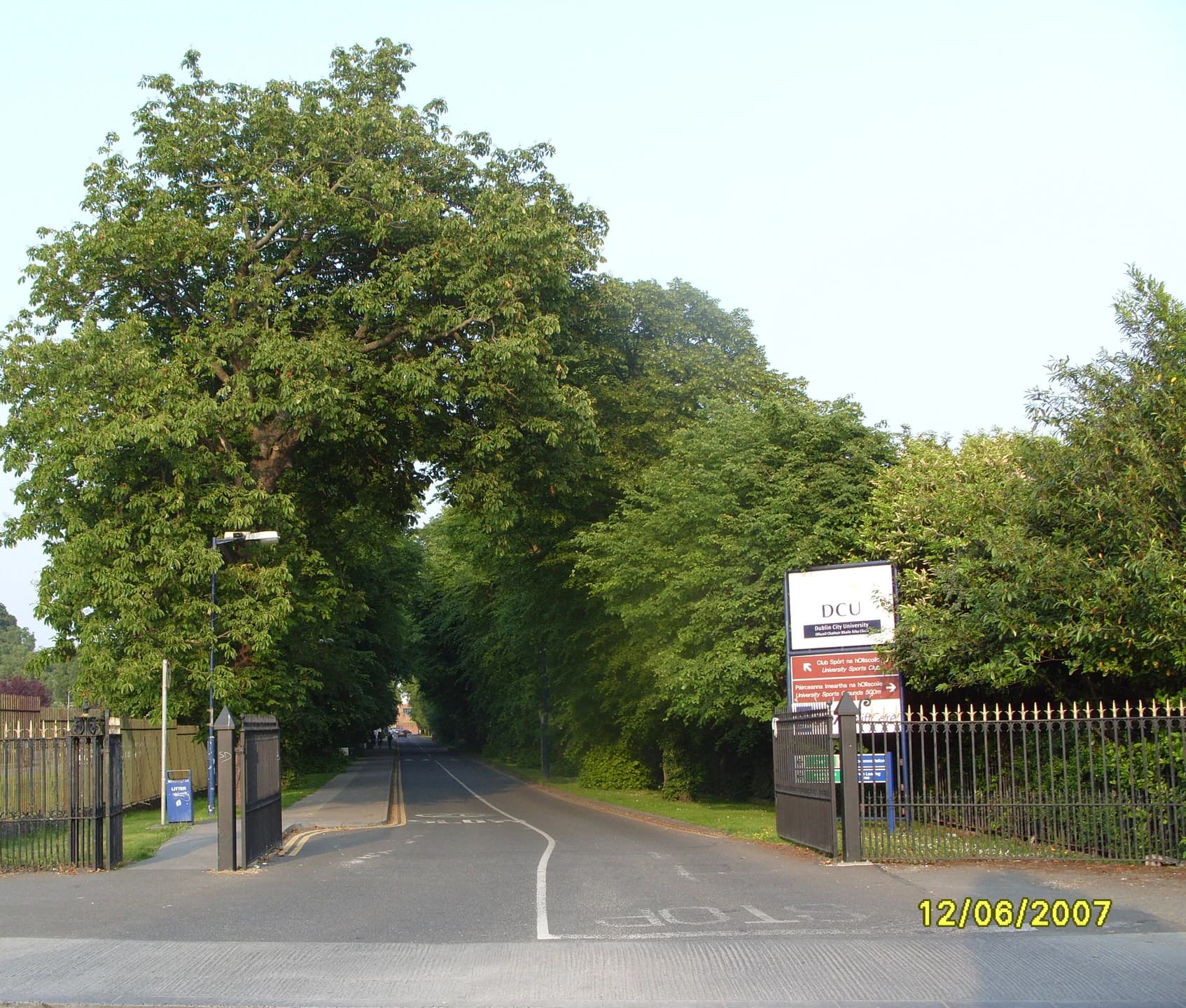
📍 Dublin, Ireland
This website uses cookies Dublin City University use cookies to personalise content and ads, to provide social media features and to analyse our traffic. We also share information about your use of our site with our social media, advertising and analytics partners who may combine it with other information that you’ve provided to them or that they’ve collected from your use of their services. Consent Selection Necessary Preferences Statistics Marketing Show details Allow all cookies Allow selection Use necessary cookies only Skip to main content Assistive Tools | Loop | Staff| Library | Vacancies | What's On COURSES DCU Open Days Undergraduate CAO Hub Postgraduate Hub DCU Micro-Credentials DCU Connected Scholarships Admissions Information Accommodation Graduate Studies Office Student Recruitment RESEARCH Research at DCU Research Support Services Research Impact Graduate Studies Office DCU:Innovate Hub DCU:Innovate Enterprise Life Sciences Institute DCU GLOBAL ENGAGEMENT INTRA Internships Courses with INTRA Engagement DCU Engagement The Engagement Hub DCU Alumni DCU in the Community DCU Arts and Culture Age Friendly University DCU Placement DCU Educational Trust DCU International Academy Centre for Talented Youth, Ireland National Institute for Digital Learning DCU Campus Store DCU Sport The Helix Changemaker Schools Network SUPPORT Student Support & Development Counselling & Personal Development Student Health Service Student Policies Financial Assistance Service Chaplaincy House of Accessibility Student Advice and Support Centre DCU Healthy Accessible Campus Registry Transcripts Current Students Orientation Examinations Examination Results Fees Information Academic Calendars Digital Technology Solutions (DTS) Student Life DCU Students Union Clubs & Societies DCU Autism Friendly Disability & Learning Support Service DCU Access Mature Students Careers Service International Students FACULTIES DCU Business School DCU Institute of Education Faculty of Engineerin

📍 Dublin, Ireland
University College Dublin (UCD) is a public research university located in Belfield, Dublin, Ireland. Founded as part of the federal Institute of Technology system in 1975 and officially becoming a university in 1990, UCD has since grown to become one of Europe's leading universities. With over 25,000 students enrolled across its diverse range of academic disciplines, UCD is known for its commitment to research and innovation.

📍 Dublin, Ireland
Dublin Business School (DBS) is one of Ireland's leading independent third-level institutions, specializing in business, law, arts, and professional education. Established in 1975, DBS offers a wide range of undergraduate, postgraduate, and professional programs designed to meet the needs of both domestic and international students. The school is known for its strong industry links, practical approach to learning, and commitment to providing students with the skills and knowledge required for successful careers. DBS is located in the heart of Dublin, providing students with access to a vibrant city and numerous professional opportunities.
📍 Dublin, Ireland
Dublin International Foundation College (DIFC) is a private, independent foundation college located in Dublin city centre. Established in 1999, it specialises in pathway and foundation programmes for international students who wish to progress to undergraduate and postgraduate degrees at partner universities in Ireland and the United Kingdom. It is the official NCUK centre in Ireland, offering the NCUK International Foundation Year alongside pre-master's and English language preparation courses.
South East Technological University (SETU), formerly known as Waterford Institute of Technology (WIT), is a prominent higher education institution in Ireland. It is recognized for its strong focus on applied learning, research, and innovation, offering a wide range of undergraduate, postgraduate, and doctoral programs across various disciplines, including business, engineering, health sciences, humanities, and science. SETU is committed to providing high-quality education and fostering partnerships with industry to enhance student employability and regional development.
📍 Athlone, Ireland
Athlone Institute of Technology (AIT) is a public university located in Athlone, Ireland. It was established in 1990 and is part of the Institutes of Technology sector in Ireland. AIT offers a wide range of undergraduate and postgraduate programs across various disciplines, including engineering, business, health sciences, and social sciences. The university is known for its strong focus on applied learning and industry engagement.
📍 Castlebar, Ireland
Atlantic Technological University (ATU) Mayo is the Castlebar campus of ATU, a public technological university formed in April 2022 through the merger of Galway-Mayo Institute of Technology (GMIT), Institute of Technology Sligo, and Letterkenny Institute of Technology. The Mayo campus traces its roots to regional technical education in Castlebar dating to the early 1990s and serves County Mayo and the wider west of Ireland with career-focused, applied higher education. The campus offers programmes across areas such as business, engineering, computing, nursing and health sciences, creative arts, and hospitality, with strong links to local employers and community organisations. Teaching emphasises hands-on learning, work placement, and skills aligned to regional industry needs rather than purely theoretical study. As part of ATU, Mayo students benefit from access to wider university resources, research activity, and pathways across multiple campuses in the Atlantic northwest region, while studying in a smaller, supportive campus environment in Castlebar.

📍 Dundalk, Ireland
Dundalk Institute of Technology (DkIT) is a public higher education institution located in Dundalk, Ireland. Established in 1975, it offers a wide range of undergraduate and postgraduate programs across various disciplines such as Engineering, Business, Health Sciences, and Creative Arts. DkIT is known for its strong focus on applied learning and industry engagement, with many programs designed in collaboration with local and international businesses. The institution is also recognized for its research activities, particularly in areas like renewable energy, healthcare, and digital technologies.
📍 Dublin, Ireland
IBAT College Dublin is a private, for‑profit higher education institution located in the heart of Dublin, Ireland. Founded in 2004 as the Institute of Business and Technology, it was later known as IBAT College Swords before moving to its current city‑centre campus at 16–19 Wellington Quay. The college is owned by Global University Systems and focuses on career‑oriented programmes in business and technology. As of 2021, IBAT serves roughly 1,500 students and offers a Bachelor of Arts (Honours) in Business (validated by Quality and Qualifications Ireland) and a part‑time MBA (validated by the University of Wales Trinity Saint David), alongside English‑language courses and a range of short professional courses.
📍 Galway, Ireland
The National University of Ireland Galway (NUI Galway) is a prestigious public research university located in Galway, Ireland. Founded in 1845, it is one of the oldest and most respected universities in the country, known for its strong emphasis on research, innovation, and academic excellence. The university offers a wide range of undergraduate, postgraduate, and doctoral programs across various disciplines, including arts, science, engineering, medicine, and business. NUI Galway is particularly renowned for its research in areas such as biomedical science, marine science, and human rights. The university is deeply integrated into the cultural and social life of Galway, a vibrant city known for its arts, music, and festivals, providing students with a rich and dynamic learning environment.

📍 Galway, Ireland
The University of Galway, officially known as Ollscoil na Gaillimhe, is a public research university located in Galway, Ireland. Founded in 1845 as Queen's College Galway, it became a constituent college of the National University of Ireland in 1908 and was renamed University of Galway in 2022. The university is renowned for its strong emphasis on research, innovation, and community engagement, offering a wide range of undergraduate, postgraduate, and doctoral programs across various disciplines including arts, science, engineering, medicine, and business. It is recognized for its vibrant campus life, modern facilities, and a commitment to fostering a diverse and inclusive academic environment.

📍 Dublin, Ireland
The Royal Irish Academy of Music (RIAM) is Ireland’s oldest music conservatoire, based in Dublin and dedicated to professional training in performance, composition, and music education. Founded in the mid-19th century, it offers pathways from junior and adult programmes through to undergraduate and postgraduate degrees, with degrees historically awarded in association with Trinity College Dublin. RIAM combines conservatoire teaching with public concerts, examinations, and community music education, serving both Ireland-based and international musicians. Its main campus is in Dublin’s city centre, with teaching studios, performance spaces, and specialist facilities for classical and related musical disciplines.
Tri-I CBM (Tri-Institutional Collaborative Biomedical Initiative) is not a university but a collaborative program involving three major institutions in Ireland: Trinity College Dublin, University College Dublin, and the Royal College of Surgeons in Ireland. This initiative focuses on advancing biomedical research, education, and innovation through shared resources, expertise, and facilities. The program aims to foster interdisciplinary collaboration among students, researchers, and faculty from the participating institutions, enhancing Ireland's reputation in biomedical sciences.

The term "Tri-Institutional" does not refer to a recognized university in Ireland. There is no widely documented higher education institution in Ireland that is officially named or commonly referred to as a "Tri-Institutional" university. The phrase may appear in the context of collaborative arrangements among multiple institutions, but it is not a standalone university. Consequently, specific details such as establishment year, student count, and contact information are not available.
Non-predictive planning guidance for Ireland. This panel does not assess admission chances or rank universities. No program-specific requirements have been verified here.
Not verified here
Check the official program requirements for your qualification, grades and subject prerequisites.
Not verified here
Check accepted exams, overall and section requirements, result validity and exemptions. IELTS and PTE use different scales.
Not verified here
Confirm the program, campus, intake and current application deadline.
Not verified here
Verify tuition, program duration and living costs against your budget. Do not count unawarded scholarships as available funding.
Use the directory to explore options, then review current program evidence before deciding where to apply. Final eligibility and admission decisions are made by the institution.
Explore top student-friendly cities and their living costs
Planning prototype using the limited country-page dataset. Missing job, community, and immigration evidence is shown explicitly.
| Average rent | EUR 1,800/mo | EUR 1,100/mo |
|---|---|---|
| Best for | Tech, Finance, Pharma | Pharma, IT, Food Science |
| Part-time job availability | Needs current local evidence | Needs current local evidence |
| Indian community | Check campus societies and neighborhoods | Check campus societies and neighborhoods |
| Immigration/job outlook | Needs occupation-specific evidence | Needs occupation-specific evidence |
Some universities in Ireland may waive IELTS when the student has strong English-medium education proof, alternate tests such as PTE/TOEFL/Duolingo, or university-specific English assessments. Waivers are university-specific, so students should not assume every programme accepts a no-IELTS route.
The safest strategy is to shortlist universities by course first, then verify English waiver rules, visa acceptability, and scholarship impact. A low English score can sometimes be offset by a pathway or pre-sessional English programme, but it may increase visa or admission complexity.
MBBS in Ireland should be evaluated carefully against recognition, licensing pathway, clinical exposure, total cost, language of instruction, and the student’s plan to practise in India or abroad. Students must verify current NMC and local medical council requirements before applying.
For medical applicants, NexStudy recommends a separate licensing checklist before deposits are paid: degree recognition, internship rules, exam pathway, hospital rotations, language requirements, and total living cost over the full programme duration.
MS in Computer Science in Ireland is usually strongest for students with a solid quantitative background, coding portfolio, internship experience, and interest in software, AI, data, cybersecurity, or cloud roles. ROI depends heavily on university tier, city, tuition, and job-search execution.
Students should compare curriculum depth, co-op/internship access, alumni hiring, local tech clusters, and post-study work rules. A lower-cost university with strong employability can outperform a high-fee option with weak career support.
An MBA in Ireland is best suited for students with clear career goals, leadership evidence, strong communication skills, and preferably work experience. Freshers should compare specialised business master’s degrees before choosing a general MBA.
The best MBA outcomes usually come from schools with strong employer networks, internships, career coaching, alumni access, and location advantage. Applicants should calculate ROI using tuition, living cost, opportunity cost, and realistic post-MBA salary ranges.
Engineering in Ireland can be a strong pathway when the student chooses a discipline linked to local industry demand, such as computer, mechanical, civil, electrical, renewable energy, robotics, or biomedical engineering. Accreditation and internship access matter as much as rankings.
Students should compare lab facilities, capstone projects, industry placement, co-op options, and post-study work eligibility. For regulated engineering roles, verify local professional registration requirements before finalising the course.
Compare student residences, shared apartments, commute time, and lease rules before paying deposits.
Look for campus Indian societies, grocery access, festivals, temples/community groups, and peer networks.
Start LinkedIn, internships, faculty networking, and portfolio work in the first semester, not after graduation.
A user-input planning model for Ireland, not a salary forecast or financial recommendation.
Model assumptions: 60% of gross salary is available before loan payments, loan repayment spans study plus five years, and 10-year earnings ignore tax, inflation, exchange-rate changes, unemployment, and salary growth.
Check off items you've completed to see your visa readiness score
Prototype suggestions from fixed subject templates. Salary, eligibility, accreditation, and immigration outcomes are not verified here.
Difficulty: Moderate
Outcome: High salary potential
Budget: Good fit
Difficulty: High
Outcome: High salary potential
Budget: Good fit
Difficulty: Moderate
Outcome: High salary potential
Budget: Good fit
Marks are planning context only. Every recorded option stays visible; this prototype does not determine eligibility.
Amount: EUR 10,000 + fee waiver (selected)
Deadline: Annual HEA round
Level: UG / PG
Amount: Partial tuition (varies)
Deadline: With admission
Level: UG / PG
Template-based guidance only; no live university, visa, or policy sources are queried by this tool.
Yes, Indian students can pursue undergraduate programmes in Ireland after completing their 12th standard. Most universities require a minimum of 60% marks in 12th, English proficiency (IELTS 6.0+), and valid financial documentation.
Popular undergraduate programmes include Engineering, Business, Computer Science, and Nursing. Some universities offer foundation year programs for students who do not meet direct entry requirements. Application deadlines vary by intake — check specific university pages on NexStudy for detailed eligibility.
Indian students typically need €EUR 1,400–€2,000 per year for tuition and living expenses, depending on the university, course, and city.
| Expense Category | Estimated Range |
|---|---|
| Rent (1BR Dublin) | EUR 1,400-2,000/mo |
| Rent (1BR Outside Dublin) | EUR 700-1,100/mo |
| Groceries | EUR 200-350/mo |
| Transport | EUR 80-120/mo |
| Dining Out | EUR 12-20/meal |
Ireland offers strong ROI for Indian students, especially in STEM and business fields. The Third Level Graduate Scheme (Stamp 1G) (12 months (Level 8 honours degree) or up to 24 months (Level 9/10 masters & PhD)) provides valuable work experience after graduation. Use the ROI Calculator above to calculate your personal return on investment.
| Hidden Cost | Why It Matters |
|---|---|
| Application and test fees | Multiple university applications, IELTS/PTE/TOEFL, score reporting, and courier costs add up. |
| Visa, medical, biometrics, insurance | These costs often come before the student receives the visa decision. |
| Housing deposit and setup | First month rent, bond/deposit, utensils, bedding, SIM, transport card, and winter clothing can be significant. |
| Course materials and placement costs | Software, lab kits, books, certification exams, and travel for interviews are often missed. |
| Expectation | Reality Check |
|---|---|
| Part-time job will cover everything | Part-time work can support expenses, but visa compliance and academic performance come first. |
| Any university will give the same outcome | Course quality, city, internships, alumni network, and career services change outcomes. |
| Visa is automatic after admission | Admission helps, but financial proof, intent, documentation, and compliance still decide the case. |
| PR is guaranteed after study | Settlement depends on changing immigration rules, occupation demand, salary, work experience, and language scores. |
Bachelor graduates: 12 months. Masters/PhD graduates: 24 months under the Third Level Graduate Programme.
Yes — Ireland is the European HQ for Google, Meta, Apple, Microsoft, LinkedIn, and Salesforce. Dublin in particular has very high demand for software engineers, data scientists and ML engineers.
There are 46 active university profiles in Ireland on NexStudy. Browse, filter and compare programs, fees, scholarships and admission requirements.
Most universities in Ireland require IELTS 6.0–6.5 for undergraduate programs and 6.5–7.0 for master's programs. Top-tier universities may require 7.0+ overall.
Yes — universities in Ireland offer merit-based and need-based scholarships, plus government-funded awards. NexStudy's scholarship finder matches you to relevant scholarships based on your profile.
Monthly living costs in Ireland vary by city. Rent (1BR Dublin): EUR 1,400-2,000/mo. Rent (1BR Outside Dublin): EUR 700-1,100/mo. Groceries: EUR 200-350/mo. Transport: EUR 80-120/mo. Dining Out: EUR 12-20/meal.
Ireland offers the Third Level Graduate Scheme (Stamp 1G) with a duration of 12 months (Level 8 honours degree) or up to 24 months (Level 9/10 masters & PhD). Completed eligible degree at Irish institution.
You need the Student Visa (Stamp 2). Application fee is EUR 60 with processing time of 4-8 weeks. Key documents include: Valid passport, Letter of acceptance from recognised institution, Evidence of tuition fee payment, and more.
The average annual cost of studying in Ireland for Indian students ranges from ₹15-28 lakhs including tuition, accommodation, and living expenses. This includes university fees and basic living costs in cities like Dublin and Cork.
Most universities in Ireland require an IELTS overall band score of 6.0 to 7.5 for admission. Top-ranked universities typically require 6.5 or higher. Indian students should aim for at least 6.5 overall with no band below 6.0 for the best chances.
Ireland has over 30 accredited universities and colleges. Major student cities include Dublin, Cork, Galway, Limerick. NexStudy helps Indian students discover, compare, and apply to universities across Ireland.
Yes, Ireland is one of the most popular study abroad destinations for Indian students. The country offers quality education, post-study work visa options, and a welcoming environment for international students. NexStudy connects Indian students with free counseling to navigate admissions to Ireland.
Indian students applying for a student visa to Ireland typically need: a valid offer letter from a recognized university, proof of financial funds, English proficiency scores (IELTS/TOEFL), and a valid passport. NexStudy provides a complete visa guide with step-by-step instructions.
Get a free profile evaluation, personalized university shortlist, and expert visa guidance from our counselors.