How many universities does Poland have for international students?
There are 22 active university profiles in Poland on NexStudy. Browse, filter and compare programs, fees, scholarships and admission requirements.
Loading NexStudy…
Affordable EU education with no IELTS requirement at many universities
Share your phone or email and our counselors will send a country-specific shortlist, visa risk check, and document plan for Indian students.
Free Poland shortlist
For Indian students
Affordable EU education with no IELTS requirement at many universities
Step-by-step process to get your National Visa (Type D)
Use the current official immigration guidance for Poland to check when you can apply and any processing estimate for your application route. We have not verified a current processing time for this summary.
Plan university deadlines and any required pre-application steps separately from the visa decision. Confirm the documents and appointments that apply to your application, and do not rely on a generic preparation buffer or processing estimate as a guaranteed decision date.
| Planning area | What to confirm |
|---|---|
| University arrangements | Confirm offer, acceptance and enrollment deadlines with your institution. |
| Documents and appointments | Check the official requirements and appointment availability for your application. |
| Visa processing | Check any current official estimate, its scope, and when the processing clock starts. |
| Travel and accommodation | Check your visa status and booking cancellation or refund terms before committing. |
Funds must be traceable, sufficient, and consistent with tuition plus living cost requirements.
Your SOP should explain course choice, academic progression, career goals, and India ties.
Names, dates, marksheets, bank letters, and offer details must match across the file.
Students should be able to explain the university, course, budget, and post-study plan clearly.
Average salaries for international graduates in Poland
| Role | Average Salary | Growth Signal |
|---|---|---|
| Software Developer | PLN 96,000 | +16% |
| Business Analyst | PLN 72,000 | +10% |
| Mechanical Engineer | PLN 66,000 | +6% |
| Data Analyst | PLN 78,000 | +18% |
| Doctor (after internship) | PLN 84,000 | +8% |
In most cases, Indian students can work part-time in Poland if their student visa permits it. Common student jobs include campus assistant roles, hospitality, retail, tutoring, delivery support, and entry-level tech or admin roles. Students should always follow the work-hour rules printed on their visa conditions.
Part-time work should be treated as support income, not the main funding source. The stronger plan is to show full financial capacity first, then use part-time income for living flexibility, local experience, and networking.
Strong fit for students who combine relevant coursework, internships, portfolio projects, and local networking while studying.
Strong fit for students who combine relevant coursework, internships, portfolio projects, and local networking while studying.
Strong fit for students who combine relevant coursework, internships, portfolio projects, and local networking while studying.
Strong fit for students who combine relevant coursework, internships, portfolio projects, and local networking while studying.
Studying in Poland can support long-term settlement only when the student chooses an eligible course, maintains visa compliance, gains relevant work experience, and meets immigration criteria at the time of application. A degree alone should not be treated as a guaranteed PR pathway.
Temporary Residence Permit gives graduates time to gain local work exposure. Students targeting settlement should compare occupation demand, salary thresholds, regional rules, language scores, and work visa conversion routes before choosing a university or city.
Monthly expenses breakdown for international students
| Expense | Estimated Range |
|---|---|
| Rent (1BR Warsaw) | PLN 2,000-3,500/mo |
| Rent (1BR Smaller Cities) | PLN 1,200-2,000/mo |
| Groceries | PLN 600-1,000/mo |
| Transport (Student Pass) | PLN 50-100/mo |
| Dining Out | PLN 25-50/meal |
| City | Average Rent | Best For |
|---|---|---|
| Warsaw | PLN 2,500/mo | Business, Finance, Tech |
| Krakow | PLN 1,800/mo | Tech, Arts, Medicine |
| Wroclaw | PLN 1,600/mo | Engineering, IT |
| Gdansk | PLN 1,500/mo | Maritime, Business |
Scholarship listings are syncing for Poland
Browse the scholarship hub or open the finder below for live matches.
Open scholarship hub →
📍 Kraków, Poland
Cracow University of Technology, officially known as Tadeusz Kościuszko University of Technology (Politechnika Krakowska im. Tadeusza Kościuszki), is one of the largest and oldest technical universities in Poland. Located in the historic city of Kraków, the university offers a wide range of engineering and technical programs at the bachelor's, master's, and doctoral levels. It is well-regarded for its strong emphasis on research, innovation, and collaboration with industry, particularly in fields such as civil engineering, mechanical engineering, computer science, electrical engineering, and architecture. The university operates across several faculties and campuses throughout Kraków, providing students with modern laboratories, research centers, and academic facilities. It participates actively in international academic exchange programs and research initiatives, attracting students and scholars from various countries. With a long tradition dating back to its establishment, Cracow University of Technology plays a significant role in Poland's higher education and scientific development.
📍 Częstochowa, Poland
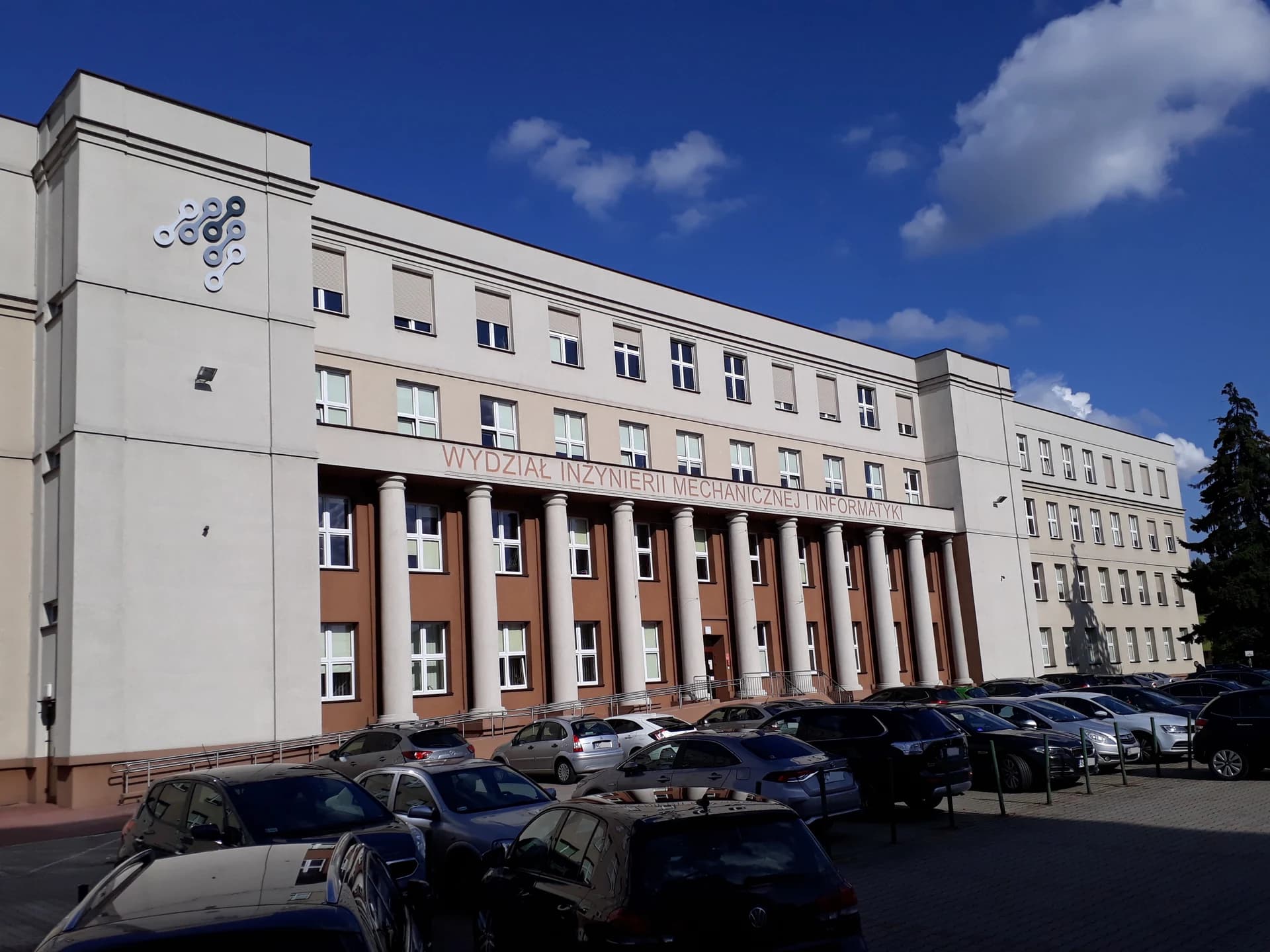
Częstochowa University of Technology (Czestochowa University of Technology) is a public university located in Częstochowa, Poland. It was established in 1990 and is one of the largest technical universities in Poland. The university offers a wide range of programs in engineering, computer science, economics, and social sciences. It is known for its strong focus on research and innovation, with several research centers and institutes. The university has a modern campus with state-of-the-art facilities, including a library, sports complex, research labs, student housing, and cafeteria.

📍 Kraków, Poland
AGH University of Krakow (Polish: Akademia Górniczo-Hutnicza im. Stanisława Staszica w Krakowie), formerly known as AGH University of Science and Technology, is one of Poland's leading technical universities. Founded in 1913 as the Mining Academy, it has grown into a comprehensive research and teaching institution with strong traditions in mining, metallurgy, materials science, geophysics, and energy engineering. Located in Krakow, the university offers a wide range of programs in engineering, computer science, natural sciences, and management, and maintains extensive collaborations with industry and academic partners across Europe and beyond. The university operates several faculties and modern research centers, focusing on innovation, sustainable technologies, and interdisciplinary education. AGH is recognized for its contributions to Polish science and engineering, and it attracts students from across Poland and internationally. Its campus is integrated into the city of Krakow, providing students with access to academic facilities, research laboratories, libraries, and student services within an urban environment.

📍 Toruń, Poland
Nicolaus Copernicus University in Toruń (Uniwersytet Mikołaja Kopernika w Toruniu, UMK) is a leading public research university in north-central Poland, named after the astronomer Nicolaus Copernicus, who was born in Toruń. Founded in 1945, it has grown into one of Poland’s largest classical universities, offering programs across humanities, social sciences, natural sciences, mathematics, law, economics, theology, fine arts, and health sciences through its Collegium Medicum in Bydgoszcz. The university is known for strong research output, modern laboratories, and internationally recognized units such as its astronomical observatory in Piwnice and medical teaching hospitals. It offers many programs in English and Polish and participates widely in European exchange networks, attracting students and researchers from across Europe and beyond. UMK’s campuses are located in Toruń, a historic medieval city and UNESCO World Heritage Site on the Vistula River, with additional medical and clinical facilities in nearby Bydgoszcz. Its setting combines a rich academic tradition with a vibrant student city atmosphere, affordable living costs, and good transport links to Gdańsk, Warsaw, and other major Polish cities.

📍 Poznań, Poland
The Poznań University of Economics and Business (UE) is a leading public university in Poland, specializing in economics, business administration, and related fields. Established in 1990, it has grown to become one of the largest and most prestigious universities in the country, with a strong focus on research and innovation. The university offers a wide range of undergraduate and graduate programs, as well as numerous postgraduate and doctoral courses. UE is known for its excellent teaching quality, modern facilities, and strong ties with the business community.

📍 Warsaw, Poland
The SGH Warsaw School of Economics is a leading public university in Poland, renowned for its excellence in economics, finance, and management education. Established in 1990, it has grown to become one of the most prestigious institutions of higher education in the country. The university offers a wide range of undergraduate, graduate, and doctoral programs, attracting students from all over the world. SGH Warsaw School of Economics is committed to fostering innovation, research, and practical learning, preparing its graduates to excel in the global economy.

The University of Information Technology and Management in Rzeszów (UITM; Polish: Wyższa Szkoła Informatyki i Zarządzania w Rzeszowie) is a non-public higher education institution in southeastern Poland. It focuses on practice-oriented programmes in information technology, management, economics, medicine and health sciences, aviation, and related fields, and is among the better-known private universities in the Podkarpackie region. UITM emphasises internationalisation, English-taught degrees, and cooperation with industry. Its main campus is in Rzeszów and serves a mixed community of Polish and international students, with support services for admissions, housing, and student life. The university operates teaching and research facilities typical of a mid-sized private university, including libraries, laboratories, and student accommodation, and maintains an active presence for prospective students through its official Polish and English websites.

📍 Wrocław, Poland
The University of Wrocław is a public research university located in Wrocław, Poland. Founded in 1990, it is one of the youngest universities in Poland but has a rich academic heritage dating back to the medieval University of Wrocław, which operated from 1459 to 1772. The university is renowned for its strong programs in mathematics, physics, computer science, and medicine, and it has a significant international presence, attracting students and researchers from around the world. Its research output is extensive, and it collaborates with numerous institutions globally. The university is also known for its vibrant student life and diverse cultural activities, contributing to Wrocław's reputation as a dynamic city.

📍 Warsaw, Poland
The Warsaw University of Technology (WUT) is a leading technical university in Poland, offering a wide range of engineering, technical, and natural science programs. Established in 1915, it has a rich history and is known for its strong focus on research and innovation. The university is located in the heart of Warsaw, providing students with ample opportunities for internships, industry collaborations, and cultural experiences.
📍 Wrocław, Poland
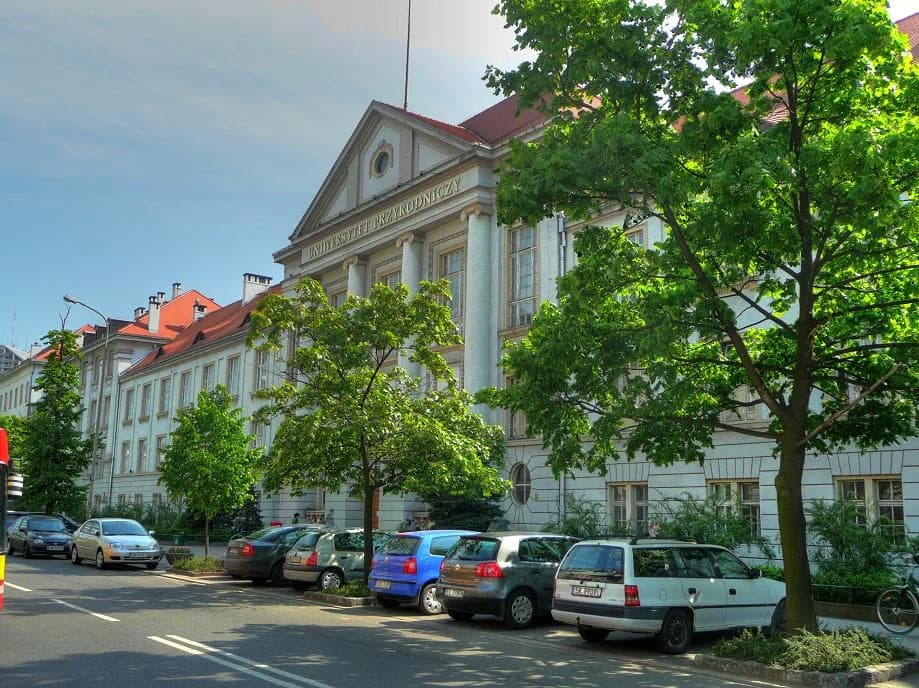
The Wrocław University of Environmental and Life Sciences (Wrocławska Wyższa Szkoła Gospodarki Żywnościowej i Wodnej) is a public university located in Wrocław, Poland. It is one of the leading institutions in the field of environmental and life sciences in Poland, offering a wide range of undergraduate and graduate programs. The university is known for its strong focus on research and innovation, with numerous research centers and laboratories dedicated to various aspects of environmental and life sciences.
Wroclaw University of Science and Technology (WUST) is a leading technical university in Poland, offering a wide range of programs in engineering, computer science, economics, and management. Established in 1969, WUST is known for its strong focus on research and innovation, with numerous collaborations with industry partners. The university has a modern campus in the heart of Wroclaw, featuring state-of-the-art facilities and a vibrant student life.

📍 Poznań, Poland
Adam Mickiewicz University (Uniwersytet im. Adama Mickiewicza w Poznaniu, AMU) is one of Poland’s largest and most prominent public research universities, based in Poznań. Named after the Romantic poet Adam Mickiewicz, it is a comprehensive institution covering the humanities, social sciences, natural sciences, exact sciences, and related professional fields, with a strong tradition in research and international cooperation. AMU operates across multiple campuses and facilities in Poznań and is known for broad undergraduate, master’s, and doctoral offerings, research institutes, and partnerships within European and global academic networks. It serves a large domestic student body alongside a growing international community and is widely regarded as a leading centre of higher education in western Poland.

📍 Warsaw, Poland
The University of Warsaw is the largest and one of the most prestigious universities in Poland. Founded in 1816, it is a leading research institution offering a wide range of programs in humanities, social sciences, and natural sciences. The university is known for its high academic standards, diverse student body, and strong emphasis on research and innovation. It plays a significant role in Poland's educational and cultural landscape, attracting students and scholars from around the world.

📍 Katowice, Poland
The University of Silesia in Katowice (Uniwersytet Śląski w Katowicach) is a major public research university in southern Poland and one of the largest higher education institutions in the country. Founded in 1968, it serves the Silesian Voivodeship and operates across several campuses in Katowice, Sosnowiec, Cieszyn, and Rybnik. The university offers a broad range of undergraduate, graduate, and doctoral programs across the humanities, social sciences, natural sciences, law, theology, and arts. As a comprehensive research university, it runs numerous institutes and interdisciplinary research centers and participates widely in national and European research projects. Its academic profile spans fields such as Polish and foreign languages, pedagogy, psychology, biology, chemistry, physics, computer science, earth sciences, law, economics, and cultural studies. The institution is also known for strong programs in teacher education and for its involvement in regional development in one of Poland's most industrialized areas. The University of Silesia hosts a sizable and growing international community, with students from many countries enrolled in full-degree programs, exchange schemes such as Erasmus+, and Polish-language preparatory courses. Student life is supported by libraries, dormitories, sports facilities, and cultural activities, while the main Katowice campus places students in an urban setting close to museums, theaters, and transport links across Upper Silesia.

Warsaw School of Economics (Polish: Szkoła Główna Handlowa w Warszawie, SGH) is Poland’s oldest and most prestigious business university, founded in 1906 as the Warsaw School of Commerce. It offers a broad range of undergraduate, graduate and doctoral programmes in economics, finance, management and related fields, and is renowned for its strong ties to industry and public administration. SGH is a research‑oriented institution that publishes influential work in economics and business studies and hosts numerous international conferences. The university is located in the heart of Warsaw and serves a diverse student body of roughly 13,000 students, including about 1,700 international scholars from more than 80 countries. SGH’s modern campus features a central library, sports facilities, research laboratories, student housing and a variety of dining options, supporting a vibrant campus life for both domestic and foreign students.

📍 Warsaw, Poland
Kozminski University (Akademia Leona Koźmińskiego, ALK) is a private, non-profit higher education institution located in Warsaw, Poland. Founded in 1993, it is widely regarded as the leading private business school in Poland and is the only Polish institution to hold the prestigious 'Triple Crown' of business school accreditations: AACSB, AMBA, and EQUIS. The university offers a broad range of programs in business, economics, law, and social sciences at the bachelor's, master's, MBA, doctoral, and executive-education levels, with many programs taught in English.
📍 Bielsko, Poland
The University of Bielsko-Biała is a public university located in Bielsko-Biała, Poland. It was established in 1990 and offers a wide range of undergraduate and postgraduate programs in various fields. The university is known for its strong focus on research and innovation, with numerous research centers and laboratories. It also has a significant international student population, with students from over 50 countries studying at the university.

📍 Katowice, Poland
The University of Economics in Katowice is one of the leading economic universities in Poland, known for its strong academic programs in economics, finance, management, and related fields. It offers a wide range of undergraduate, graduate, and doctoral programs, emphasizing both theoretical knowledge and practical skills. The university is recognized for its research contributions and collaborations with international institutions, providing students with a global perspective on economic and business challenges.

📍 Waldorf, Poland
WHU – Otto Beisheim School of Management is a leading private business school located in Vallendar, Rhineland-Palatinate, Germany—not in Poland. Founded in 1984 and named after German entrepreneur Otto Beisheim, it is widely regarded as one of Germany’s top institutions for management education and consistently ranks among Europe’s elite business schools. WHU offers undergraduate, graduate, and executive programs with a strong focus on entrepreneurship, finance, and international business. It holds triple accreditation from AACSB, EQUIS, and AMBA, placing it among a small group of globally recognized business schools. Its alumni network and corporate partnerships are especially strong in the German and broader European business communities. The school operates a main campus in Vallendar and a second campus in Düsseldorf used largely for executive and part-time programs. WHU is known for small cohort sizes, rigorous admissions, and a highly international student body relative to its total enrollment.
The Warsaw School of Computer Science is a prestigious private university located in Warsaw, Poland. Established in 1990, it is known for its strong focus on computer science and related fields. The university offers a wide range of programs, including undergraduate and graduate degrees, as well as professional courses and certifications. With a student body of approximately 2,500, the university has a diverse and international community, with around 500 international students from over 50 countries.

📍 Warsaw, Poland
Akademia Leona Koźmińskiego (Kozminski University) is a leading private higher education institution in Warsaw, Poland, specializing in business, management, finance, law, and related social sciences. Founded by Professor Andrzej Koźmiński and named after entrepreneur Leon Koźmiński, it is widely recognized as one of Central and Eastern Europe’s top business schools and holds the prestigious “triple crown” of international accreditations (AACSB, EQUIS, and AMBA). The university offers bachelor’s, master’s, MBA, doctoral, and executive education programs taught in Polish and English, with a strong emphasis on internationalization, corporate partnerships, and practice-oriented learning. Its urban campus in Warsaw’s Praga district serves as a hub for students, researchers, and business professionals from Poland and abroad. Kozminski is known for high employability outcomes, active research centers, and close ties to industry. It regularly ranks among the top business schools in Europe in Financial Times and other international rankings.

📍 Częstochowa, Poland
Politechnika Częstochowska (Częstochowa University of Technology) is a public technical university in Częstochowa, Poland. It is one of the region’s main higher-education institutions for engineering, technology, and applied sciences, serving students from the Śląskie and surrounding voivodeships as well as international applicants. The university offers bachelor’s, master’s, and doctoral programmes across faculties covering mechanical engineering, electrical engineering, materials engineering, civil engineering, management, and related technical and economic fields. Teaching is closely linked to industry and applied research, with laboratories and research units supporting work in materials science, energy, production engineering, and information technology. Its main campus is in the city of Częstochowa and includes teaching buildings, research facilities, a central library, student dormitories, and sports infrastructure. The official institutional website is pcz.pl, which provides admissions, faculty, and contact information.
Non-predictive planning guidance for Poland. This panel does not assess admission chances or rank universities. No program-specific requirements have been verified here.
Not verified here
Check the official program requirements for your qualification, grades and subject prerequisites.
Not verified here
Check accepted exams, overall and section requirements, result validity and exemptions. IELTS and PTE use different scales.
Not verified here
Confirm the program, campus, intake and current application deadline.
Not verified here
Verify tuition, program duration and living costs against your budget. Do not count unawarded scholarships as available funding.
Use the directory to explore options, then review current program evidence before deciding where to apply. Final eligibility and admission decisions are made by the institution.
Explore top student-friendly cities and their living costs
Planning prototype using the limited country-page dataset. Missing job, community, and immigration evidence is shown explicitly.
| Average rent | PLN 2,500/mo | PLN 1,800/mo |
|---|---|---|
| Best for | Business, Finance, Tech | Tech, Arts, Medicine |
| Part-time job availability | Needs current local evidence | Needs current local evidence |
| Indian community | Check campus societies and neighborhoods | Check campus societies and neighborhoods |
| Immigration/job outlook | Needs occupation-specific evidence | Needs occupation-specific evidence |
Some universities in Poland may waive IELTS when the student has strong English-medium education proof, alternate tests such as PTE/TOEFL/Duolingo, or university-specific English assessments. Waivers are university-specific, so students should not assume every programme accepts a no-IELTS route.
The safest strategy is to shortlist universities by course first, then verify English waiver rules, visa acceptability, and scholarship impact. A low English score can sometimes be offset by a pathway or pre-sessional English programme, but it may increase visa or admission complexity.
MBBS in Poland should be evaluated carefully against recognition, licensing pathway, clinical exposure, total cost, language of instruction, and the student’s plan to practise in India or abroad. Students must verify current NMC and local medical council requirements before applying.
For medical applicants, NexStudy recommends a separate licensing checklist before deposits are paid: degree recognition, internship rules, exam pathway, hospital rotations, language requirements, and total living cost over the full programme duration.
MS in Computer Science in Poland is usually strongest for students with a solid quantitative background, coding portfolio, internship experience, and interest in software, AI, data, cybersecurity, or cloud roles. ROI depends heavily on university tier, city, tuition, and job-search execution.
Students should compare curriculum depth, co-op/internship access, alumni hiring, local tech clusters, and post-study work rules. A lower-cost university with strong employability can outperform a high-fee option with weak career support.
An MBA in Poland is best suited for students with clear career goals, leadership evidence, strong communication skills, and preferably work experience. Freshers should compare specialised business master’s degrees before choosing a general MBA.
The best MBA outcomes usually come from schools with strong employer networks, internships, career coaching, alumni access, and location advantage. Applicants should calculate ROI using tuition, living cost, opportunity cost, and realistic post-MBA salary ranges.
Engineering in Poland can be a strong pathway when the student chooses a discipline linked to local industry demand, such as computer, mechanical, civil, electrical, renewable energy, robotics, or biomedical engineering. Accreditation and internship access matter as much as rankings.
Students should compare lab facilities, capstone projects, industry placement, co-op options, and post-study work eligibility. For regulated engineering roles, verify local professional registration requirements before finalising the course.
Compare student residences, shared apartments, commute time, and lease rules before paying deposits.
Look for campus Indian societies, grocery access, festivals, temples/community groups, and peer networks.
Start LinkedIn, internships, faculty networking, and portfolio work in the first semester, not after graduation.
A user-input planning model for Poland, not a salary forecast or financial recommendation.
Model assumptions: 60% of gross salary is available before loan payments, loan repayment spans study plus five years, and 10-year earnings ignore tax, inflation, exchange-rate changes, unemployment, and salary growth.
Check off items you've completed to see your visa readiness score
Prototype suggestions from fixed subject templates. Salary, eligibility, accreditation, and immigration outcomes are not verified here.
Difficulty: Moderate
Outcome: High salary potential
Budget: Good fit
Difficulty: High
Outcome: High salary potential
Budget: Good fit
Difficulty: Moderate
Outcome: High salary potential
Budget: Good fit
Marks are planning context only. Every recorded option stays visible; this prototype does not determine eligibility.
Amount: Partial tuition
Deadline: Varies
Level: UG/PG
Amount: Need/merit based
Deadline: Before intake
Level: PG
Template-based guidance only; no live university, visa, or policy sources are queried by this tool.
Yes, Indian students can pursue undergraduate programmes in Poland after completing their 12th standard. Most universities require a minimum of 60% marks in 12th, English proficiency (IELTS 6.0+), and valid financial documentation.
Popular undergraduate programmes include Engineering, Business, Computer Science, and Nursing. Some universities offer foundation year programs for students who do not meet direct entry requirements. Application deadlines vary by intake — check specific university pages on NexStudy for detailed eligibility.
Indian students typically need PLNPLN 2,000–PLN3,500 per year for tuition and living expenses, depending on the university, course, and city.
| Expense Category | Estimated Range |
|---|---|
| Rent (1BR Warsaw) | PLN 2,000-3,500/mo |
| Rent (1BR Smaller Cities) | PLN 1,200-2,000/mo |
| Groceries | PLN 600-1,000/mo |
| Transport (Student Pass) | PLN 50-100/mo |
| Dining Out | PLN 25-50/meal |
Poland offers strong ROI for Indian students, especially in STEM and business fields. The Temporary Residence Permit (1 year (for job search)) provides valuable work experience after graduation. Use the ROI Calculator above to calculate your personal return on investment.
| Hidden Cost | Why It Matters |
|---|---|
| Application and test fees | Multiple university applications, IELTS/PTE/TOEFL, score reporting, and courier costs add up. |
| Visa, medical, biometrics, insurance | These costs often come before the student receives the visa decision. |
| Housing deposit and setup | First month rent, bond/deposit, utensils, bedding, SIM, transport card, and winter clothing can be significant. |
| Course materials and placement costs | Software, lab kits, books, certification exams, and travel for interviews are often missed. |
| Expectation | Reality Check |
|---|---|
| Part-time job will cover everything | Part-time work can support expenses, but visa compliance and academic performance come first. |
| Any university will give the same outcome | Course quality, city, internships, alumni network, and career services change outcomes. |
| Visa is automatic after admission | Admission helps, but financial proof, intent, documentation, and compliance still decide the case. |
| PR is guaranteed after study | Settlement depends on changing immigration rules, occupation demand, salary, work experience, and language scores. |
There are 22 active university profiles in Poland on NexStudy. Browse, filter and compare programs, fees, scholarships and admission requirements.
Most universities in Poland require IELTS 6.0–6.5 for undergraduate programs and 6.5–7.0 for master's programs. Top-tier universities may require 7.0+ overall.
Yes — universities in Poland offer merit-based and need-based scholarships, plus government-funded awards. NexStudy's scholarship finder matches you to relevant scholarships based on your profile.
Monthly living costs in Poland vary by city. Rent (1BR Warsaw): PLN 2,000-3,500/mo. Rent (1BR Smaller Cities): PLN 1,200-2,000/mo. Groceries: PLN 600-1,000/mo. Transport (Student Pass): PLN 50-100/mo. Dining Out: PLN 25-50/meal.
Poland offers the Temporary Residence Permit with a duration of 1 year (for job search). Completed degree from a Polish university.
You need the National Visa (Type D). Application fee is EUR 80 with processing time of 2-4 weeks. Key documents include: Valid passport, University admission letter, Proof of accommodation, and more.
Get a free profile evaluation, personalized university shortlist, and expert visa guidance from our counselors.