How many universities does Malaysia have for international students?
There are 69 active university profiles in Malaysia on NexStudy. Browse, filter and compare programs, fees, scholarships and admission requirements.
Loading NexStudy…
Affordable quality education with branch campuses of top global universities
Share your phone or email and our counselors will send a country-specific shortlist, visa risk check, and document plan for Indian students.
Free Malaysia shortlist
For Indian students
Affordable quality education with branch campuses of top global universities
Step-by-step process to get your Student Pass (EMGS)
Use the current official immigration guidance for Malaysia to check when you can apply and any processing estimate for your application route. We have not verified a current processing time for this summary.
Plan university deadlines and any required pre-application steps separately from the visa decision. Confirm the documents and appointments that apply to your application, and do not rely on a generic preparation buffer or processing estimate as a guaranteed decision date.
| Planning area | What to confirm |
|---|---|
| University arrangements | Confirm offer, acceptance and enrollment deadlines with your institution. |
| Documents and appointments | Check the official requirements and appointment availability for your application. |
| Visa processing | Check any current official estimate, its scope, and when the processing clock starts. |
| Travel and accommodation | Check your visa status and booking cancellation or refund terms before committing. |
Funds must be traceable, sufficient, and consistent with tuition plus living cost requirements.
Your SOP should explain course choice, academic progression, career goals, and India ties.
Names, dates, marksheets, bank letters, and offer details must match across the file.
Students should be able to explain the university, course, budget, and post-study plan clearly.
Average salaries for international graduates in Malaysia
| Role | Average Salary | Growth Signal |
|---|---|---|
| Software Engineer | MYR 72,000 | +15% |
| Accountant | MYR 48,000 | +6% |
| Digital Marketing Manager | MYR 60,000 | +12% |
| Petroleum Engineer | MYR 96,000 | +5% |
| Quantity Surveyor | MYR 54,000 | +8% |
In most cases, Indian students can work part-time in Malaysia if their student visa permits it. Common student jobs include campus assistant roles, hospitality, retail, tutoring, delivery support, and entry-level tech or admin roles. Students should always follow the work-hour rules printed on their visa conditions.
Part-time work should be treated as support income, not the main funding source. The stronger plan is to show full financial capacity first, then use part-time income for living flexibility, local experience, and networking.
Strong fit for students who combine relevant coursework, internships, portfolio projects, and local networking while studying.
Strong fit for students who combine relevant coursework, internships, portfolio projects, and local networking while studying.
Strong fit for students who combine relevant coursework, internships, portfolio projects, and local networking while studying.
Strong fit for students who combine relevant coursework, internships, portfolio projects, and local networking while studying.
Studying in Malaysia can support long-term settlement only when the student chooses an eligible course, maintains visa compliance, gains relevant work experience, and meets immigration criteria at the time of application. A degree alone should not be treated as a guaranteed PR pathway.
Post-Study Work Pass gives graduates time to gain local work exposure. Students targeting settlement should compare occupation demand, salary thresholds, regional rules, language scores, and work visa conversion routes before choosing a university or city.
Monthly expenses breakdown for international students
| Expense | Estimated Range |
|---|---|
| Rent (1BR KL) | MYR 1,200-2,500/mo |
| Groceries | MYR 400-700/mo |
| Transport | MYR 100-250/mo |
| Street Food | MYR 5-10/meal |
| Dining Out | MYR 15-30/meal |
| City | Average Rent | Best For |
|---|---|---|
| Kuala Lumpur | MYR 1,800/mo | Business, Finance, IT |
| Penang | MYR 1,000/mo | Engineering, Manufacturing |
| Johor Bahru | MYR 900/mo | Engineering, Business |
| Cyberjaya | MYR 800/mo | IT, Multimedia, Tech |
Scholarship listings are syncing for Malaysia
Browse the scholarship hub or open the finder below for live matches.
Open scholarship hub →
📍 Shah Alam, Malaysia
Universiti Teknologi MARA (UiTM) is Malaysia’s largest public university by enrolment and campus network, with its main campus in Shah Alam, Selangor, and branch campuses and faculties across the country. It began as a training centre under RIDA in 1956, became Institut Teknologi MARA (ITM), and was elevated to full university status as UiTM in 1999. Its academic mission centres on expanding access to higher education for Bumiputera students while offering a wide range of undergraduate and postgraduate programmes. UiTM is a comprehensive university spanning science, technology, engineering, business, law, education, health sciences, arts, and social sciences. Teaching and research are supported by a large multi-campus system, industry-linked programmes, and professional pathways. The university plays a major national role in human-capital development and community engagement across Malaysia. The Shah Alam main campus serves as the administrative and academic hub, complemented by state campuses and satellite centres that extend programme delivery nationwide.
📍 Subang Jaya, Malaysia
Brickfields Asia College (BAC) is a private, not-for-profit university located in the city of Kuala Lumpur, Malaysia. Established in 1999, it is one of the few universities in the country to be accredited by the Malaysian Ministry of Higher Education for offering undergraduate, postgraduate, and professional programs. The college is known for its strong academic programs in business, engineering, information technology, and health sciences, as well as its focus on internationalization and global engagement. Brickfields Asia College aims to provide a high-quality, holistic education that prepares students for success in the modern workforce and global community.

📍 Kuala Lumpur, Malaysia
Asia Pacific University of Technology & Innovation (APU) is a leading private university in Malaysia, known for its strong emphasis on technology, innovation, and industry-driven education. Established in 1993, APU offers a wide range of undergraduate and postgraduate programs in fields such as computing, engineering, business, and design. The university is recognized for its state-of-the-art facilities, strong industry partnerships, and a diverse student body, attracting both local and international students. APU is committed to producing graduates who are equipped with the skills and knowledge to excel in the global workforce.
Tunku Abdul Rahman University of Management and Technology (TAR UMT) is a public university located in Shah Alam, Selangor, Malaysia. Established in 1991, it is one of the leading private universities in Malaysia, offering a wide range of undergraduate and postgraduate programs. The university is known for its strong focus on business, technology, and management education. TAR UMT has a diverse student body, with a significant number of international students, contributing to a rich cultural exchange. The university is also recognized for its research activities and has a strong industry linkage, providing students with ample opportunities for internships and employment.

IMU University, formerly known as the International Medical University, is Malaysia's first private medical and health sciences university. Established in 1992, it offers undergraduate and postgraduate programmes in medicine, dentistry, pharmacy, nursing, health sciences, and complementary medicine, with a strong emphasis on interprofessional education and early clinical exposure. The university is recognized by the Malaysian Medical Council and the Ministry of Higher Education, and maintains partnerships with international medical schools that enable student transfers and clinical training abroad. Its main campus is located in Bukit Jalil, Kuala Lumpur, with clinical teaching supported by affiliated hospitals across Malaysia and overseas. IMU is known for its innovative curriculum, simulation-based learning, and research in medical and health sciences education. It attracts students from more than 30 countries and provides pathways for students to complete their clinical training at partner universities in countries such as Australia, the United Kingdom, Ireland, Canada, and the United States.
📍 Kuala Sungai Baru, Malaysia
Akademi Laut Malaysia (ALAM), also known as Malaysia Maritime Academy, is Malaysia’s leading maritime education and training institution. It specializes in preparing officers and professionals for the shipping, offshore, and broader maritime industries through programmes aligned with international seafarer standards, including STCW requirements. ALAM offers diploma, degree, and professional courses in areas such as nautical studies, marine engineering, maritime management, and related technical fields. The academy operates a dedicated campus in Melaka and is closely associated with Malaysia’s shipping sector, historically linked to MISC. Training combines classroom instruction with simulator-based learning, workshops, and sea-time pathways so graduates can progress into deck, engine, and shore-based maritime careers. ALAM is widely regarded as a specialized maritime academy rather than a conventional multi-faculty research university.
📍 Subang Jaya, Malaysia
The Australian National Institute of Business & Technology (ANIBT) is a private higher education institution in Malaysia that offers Australian-based curriculum and qualifications. It is known for providing business, technology, and management programs in collaboration with Australian universities. ANIBT aims to deliver quality education with a focus on practical skills and industry relevance, catering to both local and international students.
📍 Miri, Malaysia
Curtin University Malaysia (CUTM) is a private branch campus of Curtin University, an Australian Group of Teaching Universities, located in Malaysia. It offers a range of undergraduate and postgraduate programs in fields such as engineering, health sciences, business, and arts. The university is known for its strong industry links and practical, industry-aligned curriculum, providing students with the skills needed for the workforce. CUTM's global reputation is bolstered by its partnerships with leading Australian institutions and its focus on international standards in education.
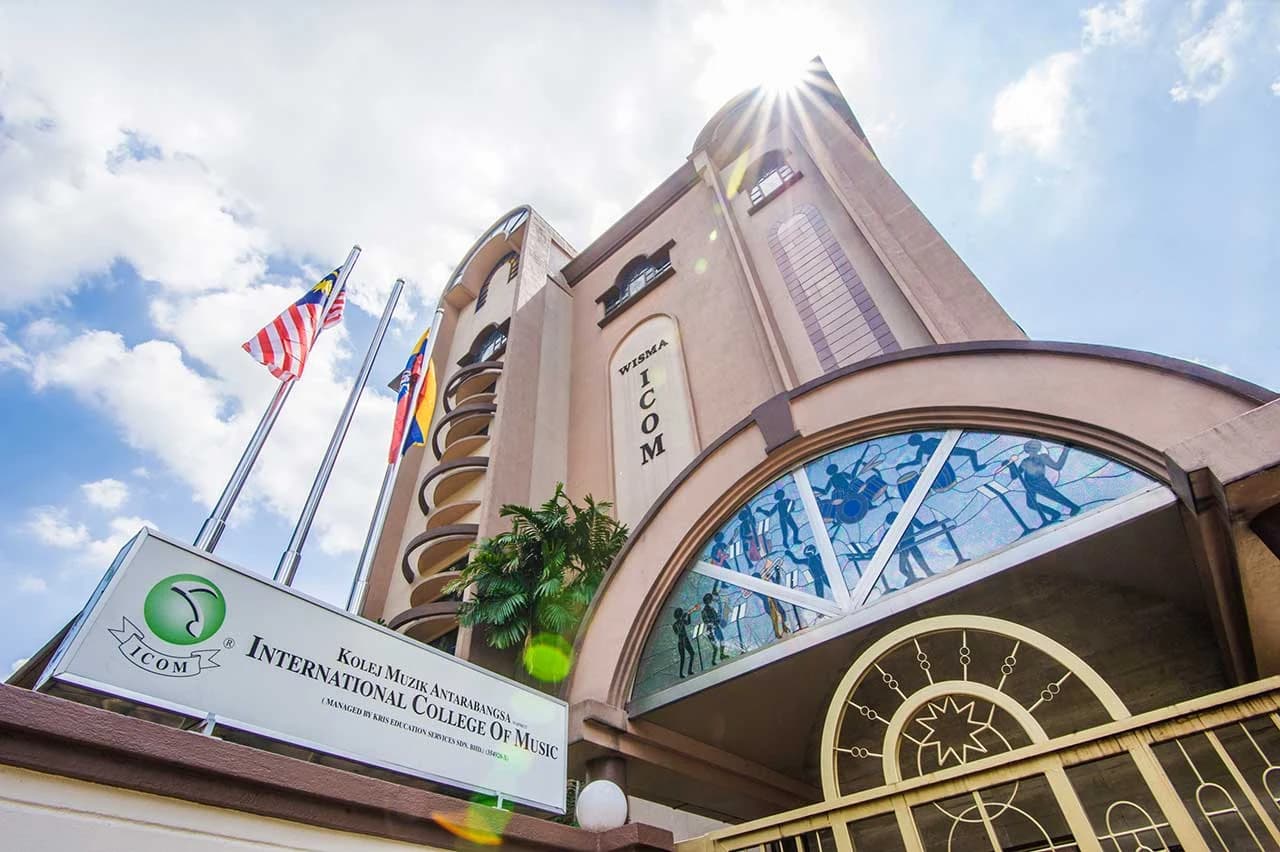
Doon School of Music, operating in association with the International College of Music (ICOM), is a private tertiary music institution in Malaysia focused on contemporary music education. It offers programmes in performance, songwriting, music production, audio technology, and music business, aimed at preparing students for careers in the entertainment and creative industries. ICOM is widely recognised as one of Malaysia’s pioneering contemporary music colleges and has historically maintained industry-oriented curricula and international pathway links for further study.
📍 Kuala Lumpur, Malaysia
HELP ACADEMY SDN BHD is a private educational institution in Malaysia. It was established in 1990 and has grown to become a prominent provider of quality education. The academy offers a wide range of programs and courses to cater to the diverse needs of its students. With a student count of 25,000 and 5,000 international students, HELP ACADEMY SDN BHD has a significant presence in the educational landscape of Malaysia.
📍 Putrajaya, Malaysia
Heriot-Watt University Malaysia is the Malaysian branch campus of Heriot-Watt University, a public research university based in Edinburgh, Scotland. Opened in Putrajaya, it delivers undergraduate and postgraduate programmes that follow the same curriculum and award the same degrees as the UK home campus. The campus attracts a diverse student body from across Southeast Asia and beyond, with particular strengths in engineering, business, psychology, actuarial science and the built environment.
📍 Kuala Lumpur, Malaysia
The International University of Malaysia-Wales (IUMW) is a private university located in Kuala Lumpur, Malaysia. Established in 1990, it was founded with the aim of providing quality education to students from various backgrounds. The university offers a wide range of undergraduate and postgraduate programs across various disciplines, including business, engineering, law, and social sciences. IUMW is known for its international student body and offers a multicultural learning environment. The university is accredited by the Ministry of Education Malaysia and has a strong focus on research and innovation.
📍 Kuala Lumpur, Malaysia
KRIS Education Services Sdn Bhd (ICOM) is a leading provider of education and training services in Malaysia. Established in 1990, the company has grown to become a trusted name in the industry, offering a wide range of programs and services to meet the needs of students and professionals alike. With a strong focus on quality education and innovative teaching methods, KRIS Education Services Sdn Bhd (ICOM) has successfully helped thousands of individuals achieve their academic and career goals.
📍 Ipoh, Malaysia
Quest International University Perak (QIUP) is a private university located in Ipoh, Perak, Malaysia. Established to provide quality higher education, QIUP offers a range of undergraduate and postgraduate programs across various disciplines, including medicine, business, engineering, and social sciences. The university is known for its modern facilities, experienced faculty, and a strong emphasis on research and innovation. QIUP aims to produce graduates who are competitive in the global job market by fostering an environment of academic excellence and practical learning.
📍 Kuala Lumpur, Malaysia
Raffles College of Higher Education (RCHE) is a private higher-education institution in Malaysia associated with the Raffles Education network. It has offered diploma and degree-pathway programmes focused on design, business, and related professional fields, with an emphasis on industry-oriented teaching and creative practice. In Malaysia the Raffles brand is closely linked to Raffles University (Johor), which developed from the Raffles College of Higher Education lineage and continues to serve domestic and international students. The institution is known for studio-based learning in art and design alongside business and management pathways, with campuses historically tied to the Raffles Education presence in Malaysia. It operates as a private provider rather than a public university, targeting career-ready graduates through applied curricula and industry links.
📍 Iskandar Puteri, Malaysia
Raffles University is a private university located in Malaysia, known for its focus on providing quality education in various fields such as business, design, and technology. The university emphasizes practical and industry-relevant learning to prepare students for the global workforce. It is part of the Raffles Education Corporation, which has a strong presence in the Asia-Pacific region.
📍 Petaling Jaya, Malaysia
Reliance College (BAC) is a private institution of higher learning in Malaysia, offering a wide range of undergraduate and postgraduate programs. Established in 1990, the college is known for its commitment to providing quality education and fostering a supportive learning environment. With a diverse student body, Reliance College (BAC) aims to produce well-rounded graduates who are equipped with the knowledge, skills, and values necessary to thrive in a globalized world.
📍 Kuala Lumpur, Malaysia
Sunway College Kuala Lumpur is a private higher education institution located in the Kuala Lumpur city, Malaysia. Established in 1990, the college is known for its diverse range of undergraduate and postgraduate programs. It is part of the Sunway Group, a leading educational and training provider in Malaysia. The college offers a wide array of programs in fields such as business, engineering, information technology, and health sciences. It is committed to providing a high-quality education and fostering a supportive learning environment for its students.
📍 Subang Jaya, Malaysia
Sunway International School (SIS) at Sunway City is a private K–12 international school in Bandar Sunway, Selangor, Malaysia. It is part of the Sunway Education Group and sits within the integrated Sunway City township alongside Sunway University, Sunway College, and Sunway Medical Centre. The school delivers internationally recognised curricula, including the Cambridge pathway (Primary through IGCSE) and the International Baccalaureate (IB) Diploma Programme for senior secondary students. SIS serves a multicultural student body drawn from local and expatriate families, with instruction in English and a focus on holistic development through academics, co-curricular activities, and community engagement. Its Sunway City campus benefits from shared access to the township’s amenities—retail, healthcare, transport links, and recreational facilities—while maintaining dedicated school facilities for learning and student life. Although often grouped with higher-education institutions in the Sunway Education ecosystem, SIS is a school rather than a university. It prepares graduates for entry to universities worldwide and maintains close ties with Sunway’s tertiary partners, but awards school-level qualifications (IGCSE, IB Diploma) rather than undergraduate or postgraduate degrees.
📍 Subang Jaya, Malaysia
Sunway TES College is a private higher education institution located in the urban setting of the large city of Petaling Jaya (population range of 1,000,000-5,000,000 inhabitants), Selangor. This institution also has branch campuses in the following location(s): Selangor. Officially accredited and/or recognized by the Ministry of Education Malaysia, Sunway TES College (SUNWAY COLLEGE) is a small (uniRank enrollment range: 2,000-2,999 students) coeducational higher education institution. Sunway TES College (SUNWAY COLLEGE) offers courses and programs leading to officially recognized higher education degrees in several areas of study. See the uniRank degree levels and areas of study matrix below for further details. This 30 years old higher-education institution has a selective admission policy based on entrance examinations and students' past academic record and grades. The admission rate range is 40-50% making this Malaysian higher education organization a somewhat selective institution. International applicants are eligible to apply for enrollment.
📍 Kuala Lumpur, Malaysia
UCSI Education Sdn Bhd is a private higher education institution located in Kuala Lumpur, Malaysia. It was founded in 1990 and has since grown to become one of the largest and most respected private universities in the country. UCSI University offers a wide range of undergraduate and postgraduate programs across various disciplines, including business, engineering, computer science, and social sciences. The university is known for its strong emphasis on research and innovation, and it has a dedicated team of faculty members who are experts in their respective fields.
📍 Kuala Lumpur, Malaysia
Universiti Kuala Lumpur (UniKL) is a private university in Malaysia owned by Majlis Amanah Rakyat (MARA). Established in 2002, it is one of the country's leading technical universities, offering a broad range of programs in engineering, information technology, business, health sciences, media, and related fields through its multiple campuses across Malaysia. The university emphasizes applied learning, industry collaboration, and practical training to prepare graduates for the workforce. UniKL operates several campuses located primarily in urban and industrial areas, including sites in Kuala Lumpur, Gombak, Ipoh, Penang, and Johor. It maintains strong partnerships with local and international institutions and industries, supporting research and development, entrepreneurship, and lifelong learning.
📍 Kota Bharu, Malaysia
Universiti Malaysia Kelantan (UMK) is a public research university located in Kota Bharu, Kelantan, Malaysia. Established in 1990, UMK has grown to accommodate over 25,000 students with around 5,000 being international students from various parts of the world.
📍 Kuala Terengganu, Malaysia
Universiti Malaysia Terengganu (UMT) is a public university located in Kuala Terengganu, Malaysia. It was established in 1990 and is known for its focus on Islamic studies, education, and social sciences. The university offers a wide range of undergraduate and postgraduate programs to cater to the diverse needs of its students. UMT is committed to providing quality education and fostering a conducive learning environment for its students.
Non-predictive planning guidance for Malaysia. This panel does not assess admission chances or rank universities. No program-specific requirements have been verified here.
Not verified here
Check the official program requirements for your qualification, grades and subject prerequisites.
Not verified here
Check accepted exams, overall and section requirements, result validity and exemptions. IELTS and PTE use different scales.
Not verified here
Confirm the program, campus, intake and current application deadline.
Not verified here
Verify tuition, program duration and living costs against your budget. Do not count unawarded scholarships as available funding.
Use the directory to explore options, then review current program evidence before deciding where to apply. Final eligibility and admission decisions are made by the institution.
Explore top student-friendly cities and their living costs
Planning prototype using the limited country-page dataset. Missing job, community, and immigration evidence is shown explicitly.
| Average rent | MYR 1,800/mo | MYR 1,000/mo |
|---|---|---|
| Best for | Business, Finance, IT | Engineering, Manufacturing |
| Part-time job availability | Needs current local evidence | Needs current local evidence |
| Indian community | Check campus societies and neighborhoods | Check campus societies and neighborhoods |
| Immigration/job outlook | Needs occupation-specific evidence | Needs occupation-specific evidence |
Some universities in Malaysia may waive IELTS when the student has strong English-medium education proof, alternate tests such as PTE/TOEFL/Duolingo, or university-specific English assessments. Waivers are university-specific, so students should not assume every programme accepts a no-IELTS route.
The safest strategy is to shortlist universities by course first, then verify English waiver rules, visa acceptability, and scholarship impact. A low English score can sometimes be offset by a pathway or pre-sessional English programme, but it may increase visa or admission complexity.
MBBS in Malaysia should be evaluated carefully against recognition, licensing pathway, clinical exposure, total cost, language of instruction, and the student’s plan to practise in India or abroad. Students must verify current NMC and local medical council requirements before applying.
For medical applicants, NexStudy recommends a separate licensing checklist before deposits are paid: degree recognition, internship rules, exam pathway, hospital rotations, language requirements, and total living cost over the full programme duration.
MS in Computer Science in Malaysia is usually strongest for students with a solid quantitative background, coding portfolio, internship experience, and interest in software, AI, data, cybersecurity, or cloud roles. ROI depends heavily on university tier, city, tuition, and job-search execution.
Students should compare curriculum depth, co-op/internship access, alumni hiring, local tech clusters, and post-study work rules. A lower-cost university with strong employability can outperform a high-fee option with weak career support.
An MBA in Malaysia is best suited for students with clear career goals, leadership evidence, strong communication skills, and preferably work experience. Freshers should compare specialised business master’s degrees before choosing a general MBA.
The best MBA outcomes usually come from schools with strong employer networks, internships, career coaching, alumni access, and location advantage. Applicants should calculate ROI using tuition, living cost, opportunity cost, and realistic post-MBA salary ranges.
Engineering in Malaysia can be a strong pathway when the student chooses a discipline linked to local industry demand, such as computer, mechanical, civil, electrical, renewable energy, robotics, or biomedical engineering. Accreditation and internship access matter as much as rankings.
Students should compare lab facilities, capstone projects, industry placement, co-op options, and post-study work eligibility. For regulated engineering roles, verify local professional registration requirements before finalising the course.
Compare student residences, shared apartments, commute time, and lease rules before paying deposits.
Look for campus Indian societies, grocery access, festivals, temples/community groups, and peer networks.
Start LinkedIn, internships, faculty networking, and portfolio work in the first semester, not after graduation.
A user-input planning model for Malaysia, not a salary forecast or financial recommendation.
Model assumptions: 60% of gross salary is available before loan payments, loan repayment spans study plus five years, and 10-year earnings ignore tax, inflation, exchange-rate changes, unemployment, and salary growth.
Check off items you've completed to see your visa readiness score
Prototype suggestions from fixed subject templates. Salary, eligibility, accreditation, and immigration outcomes are not verified here.
Difficulty: Moderate
Outcome: High salary potential
Budget: Good fit
Difficulty: High
Outcome: High salary potential
Budget: Good fit
Difficulty: Moderate
Outcome: High salary potential
Budget: Good fit
Marks are planning context only. Every recorded option stays visible; this prototype does not determine eligibility.
Amount: Partial tuition
Deadline: Varies
Level: UG/PG
Amount: Need/merit based
Deadline: Before intake
Level: PG
Template-based guidance only; no live university, visa, or policy sources are queried by this tool.
Yes, Indian students can pursue undergraduate programmes in Malaysia after completing their 12th standard. Most universities require a minimum of 60% marks in 12th, English proficiency (IELTS 6.0+), and valid financial documentation.
Popular undergraduate programmes include Engineering, Business, Computer Science, and Nursing. Some universities offer foundation year programs for students who do not meet direct entry requirements. Application deadlines vary by intake — check specific university pages on NexStudy for detailed eligibility.
Indian students typically need RMMYR 1,200–RM2,500 per year for tuition and living expenses, depending on the university, course, and city.
| Expense Category | Estimated Range |
|---|---|
| Rent (1BR KL) | MYR 1,200-2,500/mo |
| Groceries | MYR 400-700/mo |
| Transport | MYR 100-250/mo |
| Street Food | MYR 5-10/meal |
| Dining Out | MYR 15-30/meal |
Malaysia offers strong ROI for Indian students, especially in STEM and business fields. The Post-Study Work Pass (1 year) provides valuable work experience after graduation. Use the ROI Calculator above to calculate your personal return on investment.
| Hidden Cost | Why It Matters |
|---|---|
| Application and test fees | Multiple university applications, IELTS/PTE/TOEFL, score reporting, and courier costs add up. |
| Visa, medical, biometrics, insurance | These costs often come before the student receives the visa decision. |
| Housing deposit and setup | First month rent, bond/deposit, utensils, bedding, SIM, transport card, and winter clothing can be significant. |
| Course materials and placement costs | Software, lab kits, books, certification exams, and travel for interviews are often missed. |
| Expectation | Reality Check |
|---|---|
| Part-time job will cover everything | Part-time work can support expenses, but visa compliance and academic performance come first. |
| Any university will give the same outcome | Course quality, city, internships, alumni network, and career services change outcomes. |
| Visa is automatic after admission | Admission helps, but financial proof, intent, documentation, and compliance still decide the case. |
| PR is guaranteed after study | Settlement depends on changing immigration rules, occupation demand, salary, work experience, and language scores. |
There are 69 active university profiles in Malaysia on NexStudy. Browse, filter and compare programs, fees, scholarships and admission requirements.
Most universities in Malaysia require IELTS 6.0–6.5 for undergraduate programs and 6.5–7.0 for master's programs. Top-tier universities may require 7.0+ overall.
Yes — universities in Malaysia offer merit-based and need-based scholarships, plus government-funded awards. NexStudy's scholarship finder matches you to relevant scholarships based on your profile.
Monthly living costs in Malaysia vary by city. Rent (1BR KL): MYR 1,200-2,500/mo. Groceries: MYR 400-700/mo. Transport: MYR 100-250/mo. Street Food: MYR 5-10/meal. Dining Out: MYR 15-30/meal.
Malaysia offers the Post-Study Work Pass with a duration of 1 year. Graduated from a Malaysian institution.
You need the Student Pass (EMGS). Application fee is MYR 1,060-2,060 with processing time of 4-8 weeks. Key documents include: Valid passport (18+ months validity), Letter of Offer from university, Medical fitness report, and more.
Get a free profile evaluation, personalized university shortlist, and expert visa guidance from our counselors.