Top Engineering Universities in Australia (2026)
Top universities for Mechanical, Electrical, Civil and Robotics engineering masters in Australia. We rank 74 universities by QS standing, fees, scholarships and post-study work outcomes for international students.
Get a Engineering shortlist for Australia.
Share your phone or email and get matched Engineering universities, fee bands, scholarship options, and visa-risk checks before you compare rankings.
Engineering shortlist
For Australia applicants

Adelaide University
📍 Adelaide, Australia

Alphacrucis College
📍 Auckland, Australia

Box Hill Institute
📍 Melbourne, Australia

Central Queensland University
📍 Rockhampton, Australia

Charles Darwin University
📍 Darwin, Australia

CQ University
📍 Rockhampton, Australia

CQUniversity Australia
📍 Australia, Australia
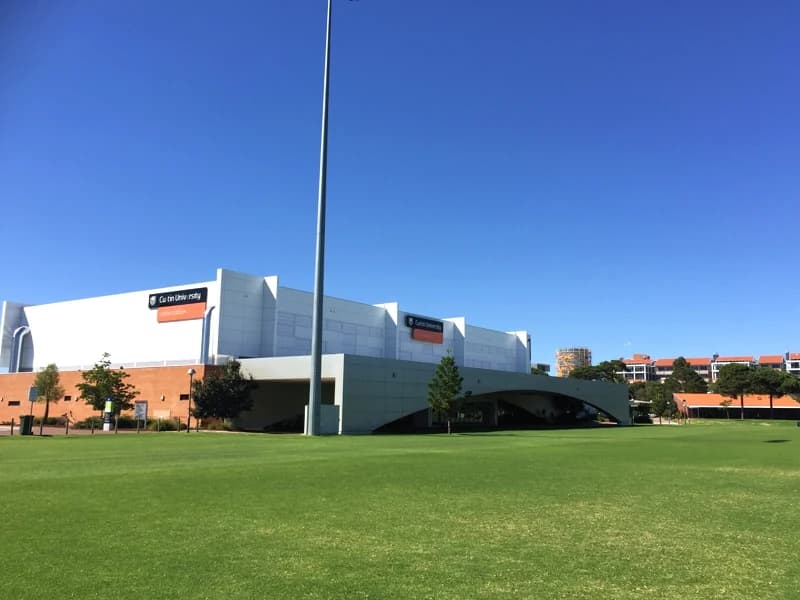
Curtin College
📍 Kent, Australia
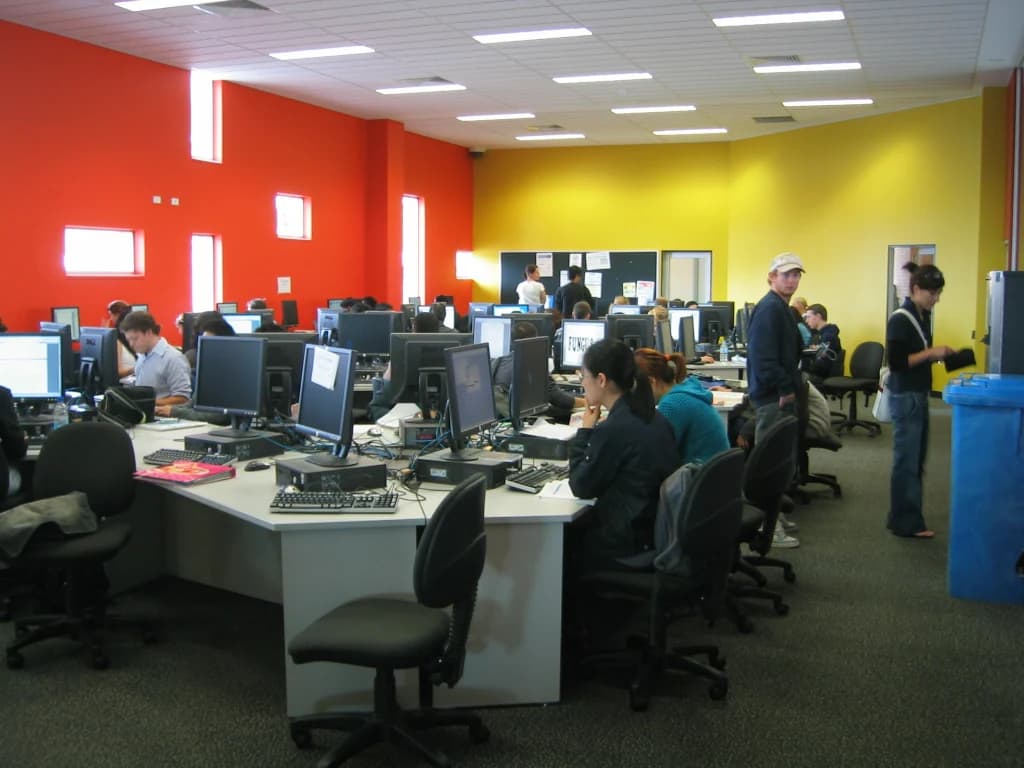
Curtin University - Australia

Curtin University Dubai

Danford College
📍 Melbourne, Australia
Danford Higher Education
📍 Melbourne - Aus, Australia

Deakin University
📍 Melbourne, Australia

Edith Cowan University
📍 Perth, Australia
Engineering Institute of Technology
📍 Perth, Australia
Eynesbury
📍 University of South Australia The University of Adelaide Flinders University , Australia
Eynesbury College
📍 Adelaide, Australia
Federation University
📍 Ballarat, Australia
Federation University - Berwick
📍 Berwick, Australia

Federation University Australia
📍 Ballarat, Australia

Flinders University
📍 Adelaide, Australia
Griffith College
📍 Brisbane, Australia

Griffith College - Cork

Griffith University
📍 Mount Gravatt, Australia
Imagine Education Australia - Ashmore
📍 Ashmore, Australia
More top courses in Australia
Australia does not use the label "MS": an engineering masters is a Master of Engineering or a Master of Professional Engineering, and for Indian graduates it takes 1 to 2 years. In the fee years printed on university pages, tuition runs from AUD 49,920 a year at RMIT (about ₹33 lakh) to AUD 61,000 at UNSW (about ₹41 lakh), with Adelaide, Monash, Sydney and UQ in between, and you must show AUD 29,710 a year for living costs (about ₹20 lakh). What matters for a professional career is whether Engineers Australia accredits the program: UNSW, UQ, RMIT, Sydney and Monash's Master of Professional Engineering are listed as accredited, while Monash's one-year Master of Engineering is not. Indian nationals who finish a coursework masters can apply for a 3-year Temporary Graduate (subclass 485) visa.
Is an MS in engineering in Australia worth it for Indian students?
Search for "MS in engineering Australia" and you will find Masters of Engineering, Masters of Professional Engineering and, in Melbourne, a three-year Master of Mechanical Engineering for non-engineers. The specialisations Indian students ask for most are mechanical, electrical, civil, and robotics or mechatronics; Monash lists eleven specialisations in its one-year Master of Engineering alone, including power systems, energy transitions and quantum engineering. All of them are coursework degrees taught in English at CRICOS-registered universities, so they qualify you for a student visa.
The financial case rests on facts you can verify. Indian nationals who complete a masters by coursework get a 3-year Temporary Graduate visa under the India–Australia ECTA, against 2 years for most other nationalities. You can work 48 hours a fortnight during study at a National Minimum Wage of AUD 26.44 an hour from 1 July 2026. And Jobs and Skills Australia puts median full-time pay for mechanical, civil and electrical engineers at AUD 2,217 to AUD 2,614 a week, well above the AUD 1,852 all-occupation median. The case against is cost: a two-year degree is a ₹1.1–1.3 crore decision before scholarships, so the choice of program, and whether it is accredited, deserves more attention than the university rank.
How much does a masters in engineering in Australia cost in 2026-27?
The figures below are the international tuition fees each university prints on its own course page. They are per year of full-time study, so a two-year degree costs about twice the annual figure, and fees are reviewed every year. Universities label different fee years, shown in the last column; compare like with like before you shortlist.
| Program | Length | Tuition per year (AUD) | Approx. INR | Fee year as labelled |
|---|---|---|---|---|
| RMIT — Master of Engineering (Mechanical Engineering) | 2 years | AUD 49,920 | ₹33.3 lakh | 2027 annual |
| Adelaide University — Master of Professional Engineering (Mechanical) | 2 years | AUD 57,100 | ₹38.1 lakh | indicative annual fee, year not stated |
| Monash — Master of Professional Engineering | 2–3 years | AUD 57,900 | ₹38.6 lakh | 2027 |
| Monash — Master of Engineering (one year) | 1 year | AUD 59,600 | ₹39.8 lakh | 2027 |
| UQ — Master of Mechanical Engineering (Professional) | 2 years | AUD 60,952 | ₹40.7 lakh | course page, 2027 intakes |
| UNSW — Master of Engineering (Mechanical Engineering) | 2 years | AUD 61,000 (AUD 127,000 to complete) | ₹40.7 lakh (₹84.7 lakh) | 2026 indicative |
| University of Sydney — engineering and computer science, postgraduate coursework | varies | AUD 57,900–63,400 (2026 entry); AUD 60,800–64,800 (2027 entry) | ₹38.6–42.3 lakh; ₹40.6–43.2 lakh | university-wide guide, per 48 credit points |
Sources: the university pages listed under Sources, checked 26 Sep 2026. A$1 = ₹66.7 (Wise mid-market, 26 Sep 2026). Melbourne publishes fees only inside its course finder, so it is not tabulated. Fees exclude OSHC, the student services fee and living costs; scholarships are decided by each university.
What will a two-year engineering masters in Australia cost in total?
A quick budget using the year-one fee for both years, the AUD 29,710 a year living-cost figure Home Affairs asks you to show, and the AUD 2,500 student visa charge. It leaves out OSHC, flights and any scholarship, so treat it as a floor.
| Scenario | Tuition | Living (visa benchmark) | Visa charge | Total | Approx. INR |
|---|---|---|---|---|---|
| 2 years at RMIT, AUD 49,920 a year | AUD 99,840 | AUD 59,420 | AUD 2,500 | AUD 161,760 | ₹1.08 crore |
| 2 years at Monash (professional masters), AUD 57,900 a year | AUD 115,800 | AUD 59,420 | AUD 2,500 | AUD 177,720 | ₹1.19 crore |
| 2 years at UNSW, AUD 127,000 to complete | AUD 127,000 (UNSW includes about AUD 1,000 a year of study costs) | AUD 59,420 | AUD 2,500 | AUD 188,920 | ₹1.26 crore |
| 1 year Monash Master of Engineering, AUD 59,600 | AUD 59,600 | AUD 29,710 | AUD 2,500 | AUD 91,810 | ₹61.2 lakh |
Sources: university course pages; Department of Home Affairs (student visa financial capacity and Visa Pricing Estimator), checked 26 Sep 2026. A$1 = ₹66.7. Actual living costs depend on the city; Home Affairs also asks for course fees and travel when it requests evidence. Loan sanction letters from banks and non-bank lenders (collateral or non-collateral) are commonly used as supporting evidence; check current LRS and TCS rules before remitting money.
Master of Engineering or Master of Professional Engineering: which one is Engineers Australia accredited?
Accreditation applies to a program, not to a person. Engineers Australia says any graduate of a fully accredited program is deemed to have met the Stage 1 competencies for the relevant occupational category, and it is a full signatory to the Washington Accord, which covers professional engineers. Provisionally accredited programs are not recognised under the accords. That distinction decides whether you can later become a member, register or apply for a migration skills assessment through the shorter route.
The degree names split along the same line. Monash says plainly that its one-year Master of Engineering "does not provide stage 1 engineering accreditation" and sends students who want it to the Master of Professional Engineering, which takes 2 years from a four-year engineering degree or 3 years from another bachelor with mathematics and physics. UNSW, UQ and RMIT market their two-year mechanical masters as accredited by Engineers Australia, and Sydney lists full accreditation for its Aerospace, Biomedical, Chemical and Biomolecular, Civil, Electrical, Mechanical and Software streams. Adelaide's Master of Professional Engineering (Mechanical) is listed as provisionally accredited, with full accreditation assessed after its first cohort graduates. Ask every admissions office for the current status of the exact stream before you pay a deposit.
Your Indian degree matters here. UTS sends holders of an Engineers Australia-accredited bachelor, or an equivalent qualification recognised under the Washington Accord, to its shorter Master of Engineering, and sends graduates of a three-year Bachelor of Technology or a non-accredited four-year BE to its two-year Master of Professional Engineering. India's National Board of Accreditation became a permanent Washington Accord signatory on 13 June 2014, but only for programs of Tier-I institutions that it has accredited and only for graduates after that date. If your BE was not NBA-accredited at that level, plan for the longer, accredited route.
Eligibility for an engineering masters in Australia from India
Universities want a four-year engineering degree in a related discipline and a credit-level average. English requirements are published as minimum scores per test; the visa itself needs only IELTS 6.0, so the university score is the binding one.
| University | Academic entry | English |
|---|---|---|
| UNSW — Mechanical | 4-year BE (or equivalent) in any engineering discipline, credit average (equivalent to UNSW WAM 65); or a 3-year Engineering Science degree at the same average | set by program; see UNSW English page |
| UQ — Mechanical (Professional) | 4-year bachelor in a relevant engineering discipline, or 3 years at an approved overseas partner with a formal pathway; GPA 5.0 on a 7-point scale | IELTS 6.5 (6.0 each band); TOEFL iBT 87; PTE 64 (60 each) |
| RMIT — Mechanical | Bachelor in aerospace, mechanical, manufacturing, mechatronics, sustainable systems or automotive engineering, GPA at least 2.0 out of 4.0 | IELTS 6.5 (no band below 6.0); TOEFL iBT 79 |
| Monash — Master of Engineering | 4-year BE in a related discipline, at least a high credit (65%) average | IELTS 6.5 (6.0 each band); PTE 58 (50 each); TOEFL iBT 79 |
| Monash — Master of Professional Engineering | 2 years: 4-year BE, 65% average; 3 years: other bachelor with 65% average and mathematics plus physics or chemistry | IELTS 6.5 (6.0 each band); PTE 58 (50 each); TOEFL iBT 79 |
| Adelaide — Professional Engineering (Mechanical) | Completed 4-year bachelor or honours degree in a relevant engineering field | IELTS 6.5 (6.0 in each band) |
| UTS — Professional Engineering | Aimed at a 3-year BTech or non-accredited 4-year BE; at least 75% of subjects passed outright | IELTS 6.5, writing 6.0; PTE 58, writing 50; TOEFL iBT 79, writing 21 |
Sources: university course pages, checked 26 Sep 2026. Universities convert Indian percentages or CGPA with their own calculators; use the official one, not a rule of thumb. No page above lists GRE or GMAT as an entry requirement, but confirm for your exact program.
Intakes and deadlines for engineering masters in Australia
Most programs start twice a year, which suits the Indian academic calendar.
- UQ lists Semester 1 starting 22 February 2027 and Semester 2 on 26 July 2027; RMIT and Adelaide list February and July intakes. Check each program page for its own start date.
- UNSW states that some programs are at capacity for 2026 intakes and closed to new overseas students, while applications for all 2027 intakes are open, and that closing dates vary by program and intake.
- Final-year BE or BTech students usually receive their last semester results around mid-year, so July is the natural intake if you graduate in May; February suits those who graduated earlier or worked for a year. Ask each university whether it makes conditional offers on provisional results.
- Apply 6 to 9 months before the intake. Offers, the Confirmation of Enrolment, health cover and the visa file together take longer than most students expect.
How to apply for a masters in engineering in Australia from India
A realistic timeline is 6 to 9 months from shortlisting to visa grant for a February or July start.
Choose the degree type and the accreditation status you need
Decide between a short, non-accredited Master of Engineering and a two-year accredited professional masters. If you plan to work as a professional engineer in Australia or another Washington Accord country, shortlist only fully accredited programs.
Sit IELTS, PTE Academic or TOEFL iBT
Aim for the university score, normally IELTS 6.5 with no band below 6.0. Use a test-centre sitting; at-home tests are not accepted for the visa, and the 485 later needs a fresh result from the 12 months before you apply.
Assemble marksheets and an engineering-focused statement of purpose
Semester marksheets, degree certificate or provisional certificate, a CV, two references and a statement that names your specialisation, your final-year project and why the program fits. Ask your university for a percentage-to-GPA letter if the credit calculator needs one.
Apply, then compare offers and scholarships
Apply online or through a university representative. Ask about merit scholarships at the offer stage because they reduce the tuition you must evidence.
Accept, pay the deposit, then get the CoE and OSHC
The Confirmation of Enrolment follows the deposit. Overseas Student Health Cover must cover your whole stay; both documents are needed before you lodge the student visa.
Lodge the subclass 500 visa
Show 12 months of living costs (AUD 29,710), first-year tuition less the deposit and AUD 2,000 for travel, or a parent's or partner's annual income of at least AUD 87,856. Answer the Genuine Student questions and pay AUD 2,500. Lodge from outside Australia.
What jobs and salaries follow an engineering masters in Australia?
We quote only Jobs and Skills Australia, which draws on the ABS Survey of Employee Earnings and Hours (May 2025) and Labour Force Survey. These are medians for whole occupations, not fresh-graduate starting pay, and the ANZSCO pages will not be updated again; JSA is replacing them with OSCA-based profiles.
| Occupation (ANZSCO) | Employed | Median full-time weekly earnings | Largest states and other indicators |
|---|---|---|---|
| Industrial, Mechanical and Production Engineers (2335) | 42,500 | AUD 2,614 (≈ ₹1.74 lakh; about AUD 136,000 a year) | Victoria 32.9%, NSW 24.5%, Queensland 19.9%; 92% full-time; annual growth 1,300 |
| Civil Engineering Professionals (2332) | 76,800 | AUD 2,217 (≈ ₹1.48 lakh; about AUD 115,000 a year) | Victoria 31.2%, NSW 27.9%, Queensland 19.1%; 93% full-time; annual growth 1,700 |
| Electrical Engineers (2333) | 33,100 | AUD 2,553 (≈ ₹1.70 lakh; about AUD 133,000 a year) | Queensland 28.0%, NSW 26.6%, Victoria 22.9%; 92% full-time; annual growth 2,100 |
| All occupations (JSA benchmark) | — | AUD 1,852 (≈ ₹1.24 lakh) | 69% work full-time hours |
Source: Jobs and Skills Australia occupation profiles (ANZSCO), checked 26 Sep 2026; earnings from ABS Survey of Employee Earnings and Hours, May 2025. A$1 = ₹66.7; annual figures are weekly median multiplied by 52. State shares are from the ABS Labour Force Survey, February 2026.
Can you work and stay in Australia after an engineering masters?
During study you can work up to 48 hours a fortnight while classes are in session, and masters by research and doctoral students have no cap. After a masters by coursework, Indian nationals can apply for the Temporary Graduate (subclass 485) visa for 3 years if they are 35 or under, apply from inside Australia, and meet the English rule (IELTS Academic 6.5 overall with 5.5 in each band, or an equivalent test result). The charge is AUD 5,750 (about ₹3.8 lakh) in the Visa Pricing Estimator, and the visa lets you look for your own job in any field.
Length of study matters. Home Affairs' study-requirement page for skilled visas (subclasses 189, 190 and 491) defines two academic years as 92 weeks of CRICOS-registered study and says the requirement cannot be met in under 16 calendar months. A one-year masters on its own does not meet that test, so confirm the rule that applies to your target visa before choosing a one-year degree. The 485 has its own study requirement, set out on its Home Affairs page.
If you later want a skilled visa as an engineer, Engineers Australia must first assess you. A graduate of a fully accredited Australian program applies through the Australian qualification pathway, and anyone with a provisionally accredited or non-accredited degree uses the competency demonstration report pathway. Engineers Australia says standard applications generally take 15 weeks just to be assigned to an assessor, so start early. Check the Home Affairs occupation lists for your occupation, because lists and points change.
New student visa rules from 2 October 2026
Frequently asked questions
Is there an MS in engineering in Australia?
Not under that name. Australian universities award a Master of Engineering, a Master of Professional Engineering or a named degree such as a Master of Mechanical Engineering (Professional). They are coursework degrees of 1 to 2 years for Indian BE or BTech graduates, and 3 years for some non-engineering bachelors.
How much does a masters in mechanical engineering cost in Australia for Indian students?
University pages show AUD 49,920 a year at RMIT (about ₹33 lakh) to AUD 61,000 at UNSW (about ₹41 lakh) for the two-year mechanical masters, with UQ at AUD 60,952 and Adelaide at AUD 57,100. A full degree plus living costs and the visa charge totals roughly ₹1.1–1.3 crore.
What is Engineers Australia accreditation and does my masters need it?
Engineers Australia accredits programs so that graduates meet the Stage 1 entry-to-practice competencies and are recognised under the Washington Accord. You need an accredited program if you want to register, become a member or be assessed for skilled migration through the Australian qualification pathway; provisional accreditation is not recognised under the accords.
Is a one-year Master of Engineering in Australia worth it?
It costs far less in total, about AUD 91,810 (₹61 lakh) at Monash including living costs and the visa charge, but it is not accredited at Stage 1 and a single year may not meet the 92-week study requirement for skilled visas. It suits students returning to India or those who already hold an accredited degree.
Can I do an engineering masters in Australia with a 3-year diploma or BSc?
Sometimes. Monash takes other bachelor degrees with mathematics and physics or chemistry into a 3-year Master of Professional Engineering, and UNSW accepts a 3-year Engineering Science degree with a credit average for its two-year mechanical masters. Most other programs ask for a four-year engineering degree.
How much do mechanical, civil and electrical engineers earn in Australia?
Jobs and Skills Australia reports median full-time earnings of AUD 2,614 a week for mechanical engineers, AUD 2,553 for electrical and AUD 2,217 for civil, against AUD 1,852 for all occupations. That is roughly ₹1.5–1.7 lakh a week, but these are medians for experienced and new engineers alike, not graduate starting pay.
Which Australian state has the most engineering jobs?
Victoria holds the largest share of mechanical engineers (32.9%) and 31.2% of civil engineers, New South Wales follows with 24.5% and 27.9%, and Queensland leads for electrical engineers at 28.0%. Choose a university in the state whose industries match your specialisation, such as mining and power in Queensland.
Do I need an Engineers Australia skills assessment after my masters?
Only if you plan to apply for a skilled migration visa as an engineer. Engineers Australia must issue an outcome letter first, and standard applications take about 15 weeks just to be assigned to an assessor. It is not needed to work on the 3-year 485 visa that follows a coursework masters.
Official sources used on this page
- UNSW — Master of Engineering (Mechanical Engineering): fees, entry, accreditation — UNSW Sydney · checked 26 September 2026
- The University of Queensland — Master of Mechanical Engineering (Professional) — The University of Queensland · checked 26 September 2026
- RMIT University — Master of Engineering (Mechanical Engineering) — RMIT University · checked 26 September 2026
- Monash University — Master of Engineering (one year, E6014) — Monash University · checked 26 September 2026
- Monash University — Master of Professional Engineering (E6011) — Monash University · checked 26 September 2026
- Adelaide University — Master of Professional Engineering (Mechanical) — Adelaide University · checked 26 September 2026
- University of Sydney — International student tuition fees (2026 and 2027 entry guide) — The University of Sydney · checked 26 September 2026
- University of Technology Sydney — Master of Professional Engineering (Accredited) — University of Technology Sydney · checked 26 September 2026
- Engineers Australia — Accreditation — Engineers Australia · checked 26 September 2026
- Engineers Australia — Migration skills assessment — Engineers Australia · checked 26 September 2026
- National Board of Accreditation (India) — International recognition, Washington Accord — National Board of Accreditation, India · checked 26 September 2026
- Jobs and Skills Australia — Industrial, Mechanical and Production Engineers (ANZSCO 2335) — Jobs and Skills Australia · checked 26 September 2026
- Jobs and Skills Australia — Civil Engineering Professionals (ANZSCO 2332) — Jobs and Skills Australia · checked 26 September 2026
- Jobs and Skills Australia — Electrical Engineers (ANZSCO 2333) — Jobs and Skills Australia · checked 26 September 2026
- Department of Home Affairs — Student visa (subclass 500) — Australian Department of Home Affairs · checked 26 September 2026
- Department of Home Affairs — Temporary Graduate visa (subclass 485), Post-Higher Education Work stream — Australian Department of Home Affairs · checked 26 September 2026
- Department of Home Affairs — Meeting the Australian study requirement — Australian Department of Home Affairs · checked 26 September 2026
- Department of Home Affairs — Visa Pricing Estimator — Australian Department of Home Affairs · checked 26 September 2026
- Fair Work Ombudsman — Minimum wages — Fair Work Ombudsman · checked 26 September 2026
- Wise — AUD to INR mid-market rate — Wise · checked 26 September 2026
Ready to study in Engineering in Australia?
Get a free profile evaluation, personalized university shortlist, and expert visa guidance from our counselors.