Top Finance & Accounting Universities in UK (2026)
Top universities for Finance, Accounting, FinTech and Investment masters in UK. We rank 141 universities by QS standing, fees, scholarships and post-study work outcomes for international students.
Get a Finance & Accounting shortlist for UK.
Share your phone or email and get matched Finance & Accounting universities, fee bands, scholarship options, and visa-risk checks before you compare rankings.
Finance & Accounting shortlist
For UK applicants

Abertay University
📍 Dundee, United Kingdom

Alliance Manchester Business School
📍 Manchester, United Kingdom

Anglia Ruskin University
📍 Cambridge, United Kingdom

Bangor University
📍 Gwynedd, United Kingdom

Bath Spa University
📍 Bath, United Kingdom

Birkbeck
📍 London, United Kingdom

Birmingham City University
📍 Birmingham, United Kingdom

Brighton College
📍 Brighton, United Kingdom

Brunel University London
📍 Uxbridge, United Kingdom
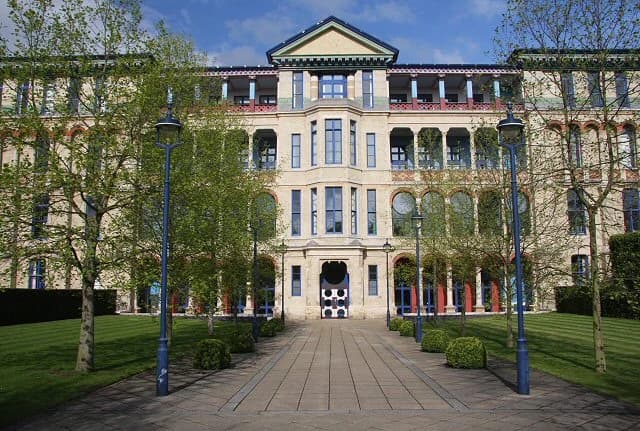
Cambridge Judge Business School
📍 Cambridge, United Kingdom

Cardiff Metropolitan University
📍 Cardiff, United Kingdom

Cardiff University
📍 Cardiff, United Kingdom

CEG International Education Group

CEG OnCampus University of Central Lancashire (UCLan) – UK North
📍 Preston, United Kingdom

City St Georges

Coventry University
📍 Coventry, United Kingdom

Cranfield School of Management
📍 Cranfield, United Kingdom

Cranfield University
📍 Cranfield, United Kingdom

Durham University
📍 DURHAM, United Kingdom

Ecole de Management de Normandie
📍 Oxford, United Kingdom

Edinburgh Napier University
📍 Edinburgh, United Kingdom

European School of Economics

Fanshawe College

Glasgow
📍 Scotland, United Kingdom

Glasgow Caledonian University
📍 Glasgow, United Kingdom
More top courses in UK
A UK MSc in finance takes 10 months (LSE) to one year and costs from about £32,800 (2026/27 fee, about ₹42 lakh) to £54,000 (about ₹69 lakh) from Strathclyde through Manchester and Warwick to Imperial, while Salford's FinTech MSc costs £16,980 (about ₹21.6 lakh). Entry is a 2:1-equivalent degree at most business schools; Imperial and Manchester do not require GMAT or GRE, while LSE asks for one if you have no UK degree. A Graduate visa then lets you work for 18 months, or 2 years if you apply by 31 December 2026.
What does an MSc in finance in the UK cover, and which type should an Indian graduate choose?
UK finance masters come in three families. The quantitative MSc Finance (Imperial, LSE, Warwick, Manchester, Strathclyde) covers asset pricing, corporate finance, derivatives and econometrics for asset management, banking, risk or quantitative roles. MSc Accounting and Finance (LSE, Manchester) adds financial reporting and links to accountancy bodies. MSc Financial Technology (Glasgow, Edinburgh, Salford) combines finance with programming, data and digital assets and takes a broader mix of backgrounds.
Manchester, Warwick, Strathclyde, Glasgow and Salford state a one-year or 12-month course, while LSE's MSc Finance runs 10 months; check the length on the Imperial page before you budget. These are pre-experience degrees, so none of the pages we read requires work experience, but they do require quantitative preparation. Imperial expects probability, calculus, matrix algebra and real analysis; Manchester asks for a finance or economics degree with a finance specialisation.
For Indian applicants, a BCom, BBA, BA Economics, BSc Statistics or Mathematics and BE/BTech graduate each have a route, but not to every course. A BCom without calculus-heavy modules suits Salford, Glasgow or Strathclyde; an engineer with strong mathematics suits Imperial, Warwick or LSE.
MSc finance in the UK: tuition fees for Indian students at eight universities, with INR
International tuition for the full-time course, read from each university's page. Entry years differ, and Manchester has not set 2027 fees, so its row shows the September 2026 reference figure.
| University and course | Tuition fee | Approx. INR | Entry year | Notes |
|---|---|---|---|---|
| Imperial — MSc Finance | £54,000 | ₹68.6 lakh | 2027 | £7,000 deposit (about ₹8.9 lakh); £125 application fee (about ₹16,000) |
| LSE — MSc Finance | £51,000 | ₹64.8 lakh | 2026/27 (intake closed; check when 2027 opens) | 10 months; deposit 15% of fee, non-refundable; no fixed deadline |
| Warwick — MSc Finance | £48,000 | ₹61.0 lakh | Sept 2027 | £3,000 deposit (about ₹3.8 lakh); deadline 2 August 2027 |
| Edinburgh — MSc Finance, Technology and Policy | £46,100 | ₹58.5 lakh | 2027 | £60 application fee (about ₹7,600); £2,500 deposit (about ₹3.2 lakh) |
| LSE — MSc Accounting and Finance | £43,000 | ₹54.6 lakh | 2026/27 | ACCA accredited; CFA affiliated |
| Glasgow — MSc Financial Technology | £38,670 | ₹49.1 lakh | 2027-28 | £2,000 deposit (about ₹2.5 lakh); ASBS India award available |
| Manchester (AMBS) — MSc Finance | £37,800 | ₹48.0 lakh | Sept 2026 (reference) | 2027 fee not yet set; £60 application fee |
| Strathclyde — MSc Finance | £32,800 | ₹41.7 lakh | 2026/27 (page notes annual rises of up to 10%) | Automatic £8,000 (about ₹10.2 lakh) scholarship; check the 2027 fee |
| Salford — MSc Financial Technology | £16,980 | ₹21.6 lakh | 2027/28 | January and September 2027 starts |
Sources: university course and fee pages. £1 = ₹127. Glasgow's course page shows the 2027-28 fee. Study UK's general international postgraduate range is £9,000–£30,000 (₹11.4–38.1 lakh); finance at ranked business schools sits well above it.
Total cost of an MSc in finance in the UK, with living and visa costs, in rupees
Study UK budgets £900–£1,300 a month outside London and £1,300–£1,400 in London. Totals add tuition, 12 months of living at £1,100 (£13,200, about ₹16.8 lakh) or £1,350 in London (£16,200, about ₹20.6 lakh), and visa plus surcharge of £1,722 (about ₹2.2 lakh: £558 fee and £776 a year for an assumed 16-month grant).
| Scenario | Tuition | Total GBP | Total INR |
|---|---|---|---|
| Salford FinTech, outside London | £16,980 | £31,902 | ≈ ₹40.5 lakh |
| Strathclyde Finance, after the £8,000 award | £24,800 | £39,722 | ≈ ₹50.4 lakh |
| Manchester Finance (2026 reference fee) | £37,800 | £52,722 | ≈ ₹67.0 lakh |
| Glasgow FinTech | £38,670 | £53,592 | ≈ ₹68.1 lakh |
| Warwick Finance (Coventry area) | £48,000 | £62,922 | ≈ ₹79.9 lakh |
| LSE Finance, London | £51,000 | £68,922 | ≈ ₹87.5 lakh |
| Imperial Finance, London | £54,000 | £71,922 | ≈ ₹91.3 lakh |
Study UK and GOV.UK Student visa and IHS pages. £1 = ₹127. Excludes flights and other scholarships. Visa funds are separate: the fee balance plus £1,171 a month (£1,529 in London) for 9 months, held for 28 days.
GMAT or GRE for MSc finance in the UK: entry requirements by university
This is what each course page said. Percentage or CGPA cut-offs for Indian degrees sit on each university's India page, which overrides any general rule.
| Course | Academic requirement | GMAT / GRE | English (IELTS Academic) |
|---|---|---|---|
| Imperial MSc Finance | First class preferred; 2:1 or equivalent considered; quantitative discipline | Not required; GMAT 55th percentile or GRE Quant 159 "adds weight" | 7.0 overall, 6.5 in each element |
| LSE MSc Finance | 2:1 in any discipline with good quantitative skills | GMAT or GRE required without a UK degree | See LSE English page |
| LSE MSc Accounting and Finance | 2:1 in accounting and finance or related subject | GMAT or GRE required without a UK degree | See LSE English page |
| Warwick MSc Finance | 2:1 in a relevant subject; finance or economics advantageous | Entry page lists none | 7.0 overall; at most two components at 6.0/6.5 |
| Manchester (AMBS) MSc Finance | 2:1 with 60% average; finance or economics degree with a finance major | Not required; may be requested if modules lack quantitative content | See Manchester language page |
| Strathclyde MSc Finance | Second-class honours in accounting, economics, business or a quantitative subject | Not stated as required | 6.5 overall, no score below 5.5 |
| Glasgow MSc Financial Technology | 2.1 in business, management or a quantitative subject | Not stated as required | 6.5 overall, no subtest below 6.0 |
| Salford MSc Financial Technology | Minimum 2:2 in any subject | Not stated as required | 6.0 overall, no element below 5.5 |
Sources: course entry pages. GOV.UK: degree-level students can have their English assessed by the university, to a standard equivalent to CEFR B2, so ask whether a medium-of-instruction letter is accepted before booking IELTS.
Do UK finance masters give you CFA or ACCA exemptions?
Professional bodies link to universities in different ways, and none of the pages below says a degree replaces a professional exam wholesale.
| Body | What the official pages say | What it means for you |
|---|---|---|
| ACCA | Only programmes that complete ACCA accreditation qualify; at most nine Applied Knowledge and Applied Skills exams, none from Strategic Professional; a fee per exemption. LSE says its MSc Accounting and Finance is ACCA accredited. | Use the ACCA Exemption Calculator and wait until exemptions are confirmed before committing. |
| CFA Institute | The University Affiliation Program recognises degrees that broadly align with the CFA curriculum. Warwick, Manchester and LSE (Accounting and Finance) cite affiliation; Strathclyde cites recognition. | No exam waivers. From 4 March 2026 the Student Scholarship cuts the registration fee to USD 600 (about ₹58,000). |
| CIMA | Strathclyde says a number of its MSc programmes are CIMA accredited; exemptions depend on the optional modules chosen. | Ask which optional modules carry exemptions. |
Sources: ACCA exemption and FAQ pages; CFA Institute University Affiliation Program and Student Scholarship pages (applications 1 September to 15 July); course pages. US$1 = ₹96.3.
How to apply for an MSc in finance in the UK from India: timeline for September 2027 entry
Imperial's round 1 closes on 29 September 2026 (decision 25 November 2026), three days after this check, so most 2027 applicants start from round 2, which closes on 6 January 2027; round 3 closes on 10 March and round 4 on 28 April 2027 (decision 16 June). Warwick closes on 2 August 2027. LSE's 2026/27 round is closed; it has rolling admissions with no fixed deadline and a separate funding deadline, so check when 2027 opens.
October to December 2026: match your degree to the course
Read the subject line before the ranking. Manchester wants a finance or economics degree with a finance major; Imperial expects calculus, linear algebra and real analysis; Strathclyde, Glasgow and Salford accept a wider range. Shortlist 5–6 courses across three fee tiers.
GMAT or GRE decision
Skip the test for Imperial, Manchester and Warwick unless your degree has weak quantitative content. Book GMAT or GRE if LSE is on the list and you have no UK degree.
Document pack
Mark sheets, degree or provisional certificate, passport, CV, personal statement and references. Imperial's quantitative experience statement and online maths test are separate steps. Final-year students apply on current results.
Round 2 onwards: apply early
Application fees are £125 (about ₹16,000) at Imperial and £60 (about ₹7,600) at Manchester and Edinburgh. Imperial and Glasgow say scholarships favour early applicants.
Offer, deposit and scholarship forms
Deposits range from £2,000 (about ₹2.5 lakh) at Glasgow to £7,000 (about ₹8.9 lakh) at Imperial and count toward tuition; LSE asks 15% of the fee, non-refundable. Apply for India-specific awards separately.
Loan and remittance
Collateral loans from public-sector banks and non-collateral loans from international lenders are the usual routes; a sanction letter counts as visa funds. Send deposits under the Liberalised Remittance Scheme and check current TCS treatment with your bank.
CAS and visa
Hold the fee balance plus £10,539 (about ₹13.4 lakh), or £13,761 (about ₹17.5 lakh) in London, for 28 days. Apply up to 6 months before the course, pay £558 (about ₹71,000) plus the surcharge and give biometrics; GOV.UK quotes about 3 weeks.
Scholarships for an MSc in finance in the UK for Indian students
Amounts and conditions are as each page states them. Most are partial and some apply to any subject at that university.
| Scholarship | Amount | Who and how |
|---|---|---|
| Strathclyde SBS International Masters scholarship | £8,000 (≈ ₹10.2 lakh) | Automatic for international offer-holders on MSc Finance; a merit-based Dean's Excellence Award is higher |
| Glasgow ASBS Indian Excellence Award | £12,500 (≈ ₹15.9 lakh) | Indian applicants to eligible ASBS taught masters; apply after accepting an offer |
| Imperial Inspires | £15,000 (≈ ₹19.1 lakh) | Overseas fee-paying candidates; extra essay from September 2026 |
| Imperial Excellence | Up to £15,000 (≈ ₹19.1 lakh) | Considered automatically at offer stage; Dean's Impact scholarship is £25,000 (≈ ₹31.8 lakh) after a written assessment |
| Warwick Business School masters scholarships | Up to 50% of tuition | Eligible candidates; see the WBS funding page |
| LSE scholarships | Up to £25,000 (≈ ₹31.8 lakh) | Merit and financial need; the 2026 intake deadline was 23 April 2026, so check the 2027 date |
| GREAT Scholarships | £10,000 (≈ ₹12.7 lakh) | Indian passport holders at 13 listed universities for 2026-27; none is a school in this guide |
| Chevening | Government-funded one-year master's | The 2027-28 round closes 6 October 2026, 11:00 UTC; for later entry, watch for the next opening (this year's opened 4 August) |
Sources: university funding pages, Study UK GREAT page for India, Chevening timeline. £1 = ₹127.
Jobs after an MSc in finance in the UK: Graduate visa, Skilled Worker going rates and official pay data
The Graduate visa costs £937 (about ₹1.19 lakh) plus £1,035 a year (about ₹1.31 lakh) health surcharge and needs no sponsor. It lasts 2 years if you apply on or before 31 December 2026 and 18 months from 1 January 2027. A Skilled Worker employer must pay at least £41,700 (about ₹53 lakh) or the going rate, whichever is higher; Graduate-visa holders can be paid 70% of the going rate, never below £33,400 (about ₹42.4 lakh), for up to 4 years in total.
| Occupation (SOC 2020) | Going rate | 70% new-entrant rate | National Careers Service range |
|---|---|---|---|
| 2421 Chartered and certified accountants (auditors, fund accountants) | £49,200 (₹62.5 lakh) | £34,500 (₹43.8 lakh) | — |
| 2422 Finance and investment analysts and advisers | £45,800 (₹58.2 lakh) | £33,400 (₹42.4 lakh) | Investment analyst £28,000–£75,000 (₹35.6–95.3 lakh); financial adviser £27,000–£67,000 (₹34.3–85.1 lakh) |
| 2431 Management consultants and business analysts (including risk analysts) | £50,200 (₹63.8 lakh) | £35,100 (₹44.6 lakh) | — |
| 2433 Actuaries, economists and statisticians | £55,100 (₹70.0 lakh) | £38,600 (₹49.0 lakh) | Actuary £32,000–£70,000 (₹40.6–88.9 lakh) |
| All full-time employees (ONS, April 2025) | Median £39,039 (₹49.6 lakh) | — | — |
GOV.UK Appendix Skilled Occupations, Table 1, and Skilled Worker pages; NCS ranges run from "starter" to "experienced"; ONS Employee earnings in the UK 2025. £1 = ₹127. 2423 Taxation experts: going rate £48,500 (₹61.6 lakh).
Working, family and common mistakes on a UK finance master's
UKCISA says degree-level students at a sponsor with a track record can work up to 20 hours a week in term time and full time outside it; internships matter more for finance recruitment than part-time pay. GOV.UK says that for postgraduate courses starting on or after 1 January 2024 only PhD, doctorate or research-based degree students can bring a partner or child, so a taught MSc student comes alone.
Is a UK MSc in finance worth the cost for an Indian graduate?
Frequently asked questions
How much does an MSc in finance in the UK cost for Indian students?
Tuition runs from £32,800 (about ₹42 lakh) at Strathclyde and £37,800 (about ₹48 lakh) at Manchester to £48,000 (about ₹61 lakh) at Warwick, £51,000 (about ₹65 lakh) at LSE and £54,000 at Imperial (about ₹69 lakh). With living costs and visa fees, the total is about ₹50–91 lakh depending on the city and any scholarship.
Is GMAT required for MSc finance in the UK?
Not at most schools we checked. Imperial and Manchester say it is not required, and Warwick's entry page lists no test. LSE requires GMAT or GRE if you do not hold a UK degree. A strong score can still help: Imperial notes a 55th percentile or GRE Quant 159 adds weight.
Can I do an MSc in finance in the UK with a BCom or BBA?
Yes at several universities. Strathclyde accepts second-class degrees in accounting, economics or business with no prior finance, Glasgow's FinTech course takes a 2.1 in business or management and Salford takes a 2:2 in any subject. Manchester wants a finance major and Imperial expects calculus and linear algebra.
Which UK universities offer a fintech masters and what do they cost?
Salford's MSc Financial Technology costs £16,980 (2027/28, about ₹21.6 lakh), Glasgow's £38,670 for 2027-28 (about ₹49.1 lakh) and Edinburgh's MSc Finance, Technology and Policy £46,100 for 2027 (about ₹58.5 lakh). Salford starts in January and September 2027; Glasgow and Edinburgh start in September.
Does a UK MSc in finance give CFA exemptions?
The CFA Institute describes no exam exemptions for degrees. Its University Affiliation Program recognises degrees that align with the CFA curriculum, and students at affiliated universities can apply for a Student Scholarship cutting the registration fee to USD 600 (about ₹58,000); applications run from 1 September to 15 July.
Can a UK master's in accounting and finance give ACCA exemptions?
Some can. LSE says its MSc Accounting and Finance is ACCA accredited. ACCA awards at most nine Applied Knowledge and Applied Skills exemptions, none from Strategic Professional, charges a fee per exemption, and advises confirming exemptions in its calculator before you commit to a course.
What are the Imperial MSc Finance deadlines for 2027 entry?
Round 1 closes on 29 September 2026 (decisions by 25 November). Round 2 closes on 6 January 2027 (decision 3 March), round 3 on 10 March (decision 5 May) and round 4 on 28 April 2027 (decision 16 June). The application fee is £125 (about ₹16,000) and the course is £54,000 (about ₹68.6 lakh).
Official sources used on this page
- Imperial College Business School — MSc Finance: 2027 fees, scholarships — Imperial College London · checked 26 September 2026
- Imperial College Business School — MSc Finance: admissions, GMAT, IELTS, 2027 rounds — Imperial College London · checked 26 September 2026
- LSE — MSc Finance (full-time): entry, GRE/GMAT, 2026/27 fee — London School of Economics · checked 26 September 2026
- LSE — MSc Accounting and Finance: ACCA accreditation, CFA affiliation, 2026/27 fee — London School of Economics · checked 26 September 2026
- Warwick Business School — MSc Finance: 2027 fees, deadline, CFA affiliation — University of Warwick · checked 26 September 2026
- Warwick Business School — MSc Finance: entry requirements — University of Warwick · checked 26 September 2026
- Alliance Manchester Business School — MSc Finance: entry, fees, application fee — University of Manchester · checked 26 September 2026
- University of Strathclyde — MSc Finance: entry, fees, CIMA and CFA recognition — University of Strathclyde · checked 26 September 2026
- University of Glasgow — MSc Financial Technology: 2027-28 fee, entry, deposit, scholarships — University of Glasgow · checked 26 September 2026
- University of Edinburgh Business School — MSc Finance, Technology and Policy: 2027 fees — University of Edinburgh · checked 26 September 2026
- University of Salford — MSc Financial Technology (FinTech): 2027/28 fees and entry — University of Salford · checked 26 September 2026
- ACCA — Exemption accredited programmes — ACCA · checked 26 September 2026
- ACCA — Students' FAQs on exemptions — ACCA · checked 26 September 2026
- CFA Institute — University Affiliation Program — CFA Institute · checked 26 September 2026
- CFA Institute — Student Scholarship — CFA Institute · checked 26 September 2026
- GOV.UK — Student visa: overview and fee — UK Home Office · checked 26 September 2026
- GOV.UK — Student visa: money you need — UK Home Office · checked 26 September 2026
- GOV.UK — Student visa: knowledge of English — UK Home Office · checked 26 September 2026
- GOV.UK — Student visa: your partner and children — UK Home Office · checked 26 September 2026
- GOV.UK — Immigration Health Surcharge: how much you pay — UK Home Office · checked 26 September 2026
- GOV.UK — Graduate visa — UK Home Office · checked 26 September 2026
- GOV.UK — Skilled Worker visa: your job and salary — UK Home Office · checked 26 September 2026
- GOV.UK — Skilled Worker visa: when you can be paid less — UK Home Office · checked 26 September 2026
- GOV.UK — Immigration Rules Appendix Skilled Occupations: going rates — UK Home Office · checked 26 September 2026
- National Careers Service — Investment analyst job profile — National Careers Service (DfE) · checked 26 September 2026
- National Careers Service — Financial adviser job profile — National Careers Service (DfE) · checked 26 September 2026
- National Careers Service — Actuary job profile — National Careers Service (DfE) · checked 26 September 2026
- ONS — Employee earnings in the UK: 2025 (ASHE) — Office for National Statistics · checked 26 September 2026
- UKCISA — Student work — UK Council for International Student Affairs · checked 26 September 2026
- Study UK (British Council) — Cost of studying and living in the UK — British Council · checked 26 September 2026
- Study UK (British Council) — GREAT Scholarships: India 2026-27 — British Council · checked 26 September 2026
- Chevening — Application timeline 2027-28 — UK Foreign, Commonwealth & Development Office · checked 26 September 2026
- Wise — GBP to INR mid-market rate — Wise · checked 26 September 2026
- Wise — USD to INR mid-market rate — Wise · checked 26 September 2026
Ready to study in Finance & Accounting in UK?
Get a free profile evaluation, personalized university shortlist, and expert visa guidance from our counselors.