Top Data Science Universities in Germany (2026)
Best universities for Data Science, Analytics and Business Intelligence masters programs in Germany. We rank 81 universities by QS standing, fees, scholarships and post-study work outcomes for international students.
Get a Data Science shortlist for Germany.
Share your phone or email and get matched Data Science universities, fee bands, scholarship options, and visa-risk checks before you compare rankings.
Data Science shortlist
For Germany applicants

Ansbach University of Applied Sciences
📍 Ansbach, Germany

Arden University – Berlin
📍 Berlin, Germany

Arden University Berlin

Bielefeld University
📍 Bielefeld, Germany

BIMM University - Germany
📍 Berlin, Germany

Chemnitz University of Technology
📍 Chemnitz, Germany

Deggendorf Institute of Technology
📍 Deggendorf, Germany

Dresden University of Technology
📍 Dresden, Germany
EBS Business School (EBS Universitat fur Wirtschaft und Recht)
📍 Oestrich-Winkel, Germany
EBS UNIVERSITAT
📍 Oestrich-Winkel, Germany

EIIE EURASIA Institute for International Education GmbH
📍 Berlin, Germany
EU Business School (Old Name - European University)
📍 Munich, Germany

European School of Management and Technology
📍 Berlin, Germany

Frankfurt School of Finance & Management
📍 Frankfurt, Germany
Frankfurt School of Finance and Management
Freie University of Berlin
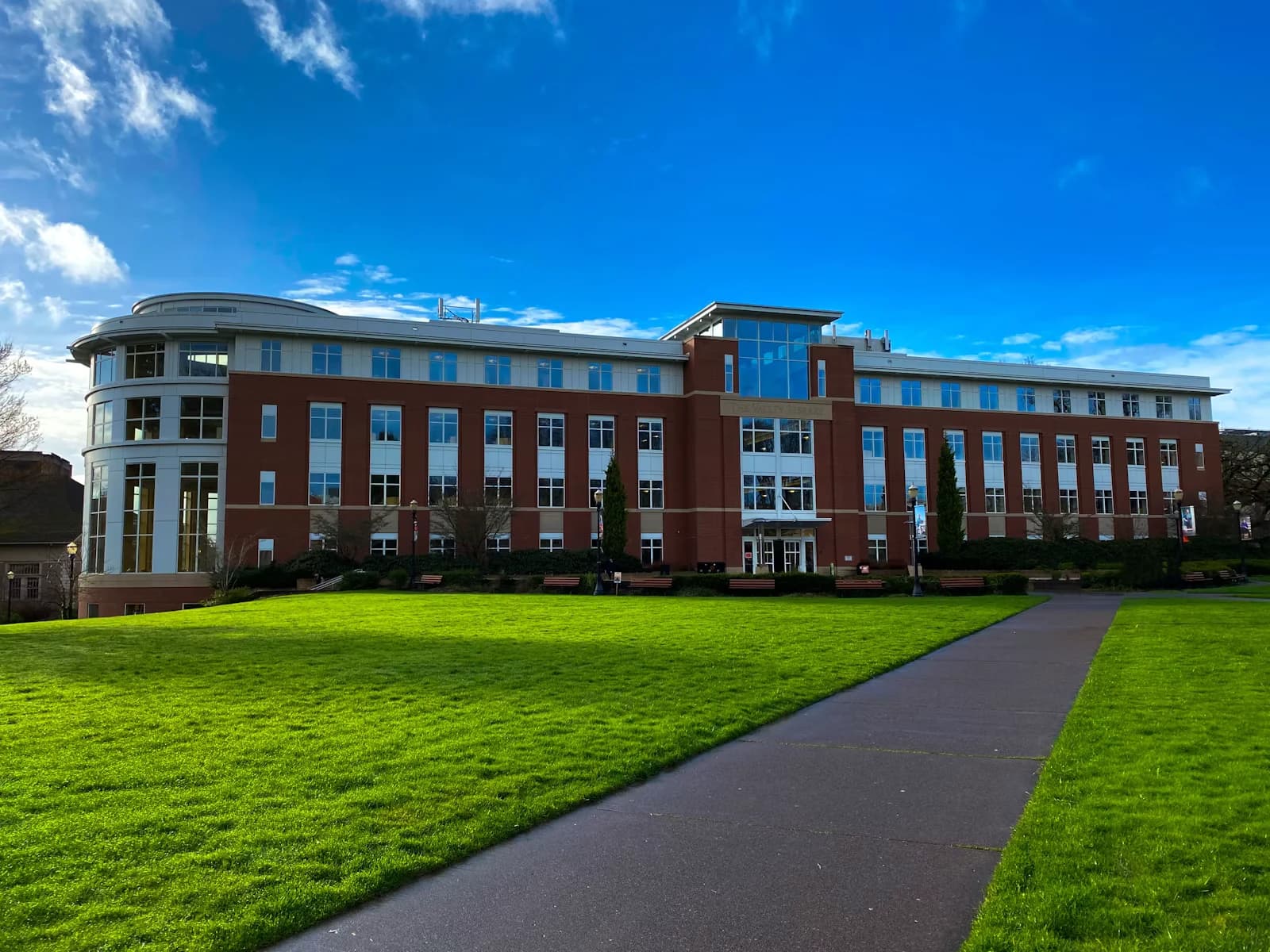
Friedrich
GISMA Business School
📍 Hanover, Germany

Gisma University of Applied Sciences
GUS - Berlin School of Business and Innovation - Germany
📍 Berlin, Germany

HafenCity University Hamburg
📍 Hamburg, Germany

Hamm

Hector School of Engineering and Management
Helmholtz Munich

Hertie School
📍 Berlin, Germany
More top courses in Germany
An MS in data science in Germany is a four-semester degree taught in English, with tuition of €0 at RWTH Aachen, Saarland, TU Dortmund and Göttingen, the Baden-Württemberg state rate of €1,500 a semester at Tübingen (confirm on the programme page), and €6,000 a semester at TUM; the private SRH Berlin charges €5,950. Public programmes are computer-science-led: expect a CS, maths or statistics bachelor's, an APS certificate and, at RWTH, TUM and Saarland, a GRE or GATE score. Two years cost about ₹25–33 lakh at a tuition-free university and ₹50–58 lakh at TUM, and graduates get up to 18 months to find a job.
Why do Indian students look at an MS in data science in Germany?
The pitch is the same as for other German master's degrees: no tuition at most public universities and a long job-search window. A data science degree at RWTH Aachen, Saarland University, TU Dortmund or Göttingen charges €0 tuition and a semester contribution of about €300–460 (₹33,000–50,000). The catch is who may enter. Public data science masters are built on computer-science, mathematics and statistics foundations, and departments check module content, so a BCom, BBA or non-technical analytics diploma will not clear the filter.
Which German universities offer an MS in data science in English, and what do they charge?
All eight programmes run four semesters. Tuition is the non-EU rate that applies to Indians; every university also charges a semester contribution. Fees, tests and deadlines change between rounds, so open the linked page before you apply.
| University and programme | Tuition per semester | Semester fee | English proof | Entry rules and deadline |
|---|---|---|---|---|
| TUM, M.Sc. Data Engineering and Analytics | €6,000 (≈ ₹6.5 lakh) | €97 (summer 2026; ≈ ₹10,600) | English certificate before the deadline | Degree equivalent to TUM B.Sc. Informatics; GRE Quant 164 + Writing 4.0 or GATE; APS; uni-assist VPD; winter deadline 31 May (31 Mar recommended for visa cases) |
| RWTH Aachen, M.Sc. Data Science | €0 | about €300–360 (≈ ₹33,000–39,000) | B2; MOI letters not accepted | Degree in CS, maths or physics with listed modules; GRE Quant above 75th percentile, Verbal above 15th, Writing 3.5; winter: December to 1 March; open admission |
| Saarland University, M.Sc. Data Science and AI | €0 | €394.30 (≈ ₹43,000) | C1; IELTS 7.0 | CGPA 75% and top 10% of class; GRE or GATE mandatory; APS; deadlines 15 Nov (early) or 15 May |
| TU Dortmund, M.Sc. Data Science | €0 | about €320 (≈ ₹34,900) | B2; IELTS 5.5 listed | Basics in CS, maths and statistics; German grade of at least 2.7; 10-page statistics project report; non-EU winter 4 Jan–15 May |
| University of Göttingen, M.Sc. Applied Data Science | €0 | about €460 (≈ ₹50,100) | C1; IELTS 6.5 | At least 60 ECTS in data science, CS, statistics or maths (45 minimum); dMAT Data Science strongly recommended; video interview; winter: until 1 May |
| University of Tübingen, M.Sc. Machine Learning | Baden-Württemberg state rate €1,500 (≈ ₹1.64 lakh); DAAD lists "varied" | about €200 (≈ ₹21,800) | C1 | German grade of at least 2.0; 27 ECTS maths and 18 ECTS CS; letter of motivation and CV; apply until 30 April |
| Heidelberg University, M.Sc. Mathematics of Machine Learning and Data Science | Baden-Württemberg state rate; DAAD lists "varied" | €161.10 (≈ ₹17,600) | B2; IELTS 5.5 listed | Mathematics bachelor's with German grade of 2.3 or better; 1 Feb–15 Mar |
| SRH University Berlin (private), M.Sc. Applied Data Science and AI | €5,950 (≈ ₹6.5 lakh) | none listed | B2 via placement test or interview | 180-credit degree in CS, data science, IT, AI, maths or business informatics; no deadline listed |
Sources: TUM, RWTH Aachen and Saarland Informatics Campus pages; DAAD International Programmes entries for Saarland, Dortmund, Göttingen, Tübingen, Heidelberg and SRH; Baden-Württemberg ministry; all read 26 Sep 2026. €1 = ₹109 (Wise mid-market rate, 26 Sep 2026). "About" marks amounts the university gives as approximate.
What does a masters in data science in Germany cost in Indian rupees?
Tuition regime decides the total. Living costs use the DAAD band of €900–1,200 a month; the blocked account is money you spend, not an extra fee.
| Cost item | EUR | Approx. INR | Notes |
|---|---|---|---|
| Tuition, RWTH, Saarland, Dortmund, Göttingen | €0 | ₹0 | Semester contribution still payable |
| Tuition, Tübingen at the state rate, 4 semesters | €6,000 | ₹6.5 lakh | €1,500 per semester; confirm on the programme site |
| Tuition, TUM, 4 semesters | €24,000 | ₹26.2 lakh | €6,000 per semester; waivers are separate applications |
| Tuition, SRH Berlin (private), 4 semesters | €23,800 | ₹25.9 lakh | €5,950 per semester for non-EU students |
| Living costs, 24 months (DAAD band) | €21,600–28,800 | ₹23.5–31.4 lakh | Average student spend is €876 a month (2023 survey) |
| Blocked account for the visa | €11,904 per year | ₹13.0 lakh | €992 a month; banks charge €70–150 to open it |
| Total, tuition-free university | ≈ €22,800–30,600 | ≈ ₹25–33 lakh | Before part-time income |
| Total, Tübingen at the state rate | ≈ €28,400–35,600 | ≈ ₹31–39 lakh | Adds €6,000 tuition |
| Total, TUM at €6,000 a semester | ≈ €46,000–53,200 | ≈ ₹50–58 lakh | Adds €24,000 tuition unless waived |
Sources: DAAD finances page; TUM, RWTH, Saarland, Dortmund, Göttingen and SRH entries; German Missions in India, read 26 Sep 2026. €1 = ₹109. Totals are our arithmetic: living costs plus semester contributions of about €300–460 a semester (€1,200–1,840 over four semesters); flights and deposits are excluded.
Can you apply for a data science masters in Germany with your Indian degree?
Departments decide by transcript content, not by degree title, so the table maps common Indian backgrounds to what the pages read on 26 Sep 2026 say. It is a pattern, not an eligibility ruling.
| Your Indian degree | Likely fit | What to check |
|---|---|---|
| BTech/BE in CS, IT or AI and Data Science (4 years) | Strong fit for RWTH, Saarland, TUM, Dortmund, Göttingen | RWTH lists the modules (programming, algorithms, databases, theory, calculus, linear algebra, stochastics); match yours module by module |
| BSc in statistics, mathematics or physics (3 years) | Possible at RWTH (maths/physics profile), Göttingen, Dortmund, Heidelberg (maths) | Saarland and Tübingen also want programming and algorithms credits, and Saarland adds machine learning |
| BSc CS or BCA (3 years) | Possible where 180 credits suffice, such as Saarland and Göttingen | Weighed on content and grades; expect a stricter read |
| BTech in mechanical, civil, ECE or chemical engineering | Weak fit for data science masters | Göttingen accepts other fields with at least 45 ECTS in the relevant area; otherwise consider an engineering master's |
| BCom, BBA, BA or business analytics diploma | Not eligible at public universities | SRH Berlin also asks for a 180-credit degree in CS, data science, IT, AI, maths or business informatics, so check eligibility with SRH before applying |
Sources: RWTH Aachen application page, Saarland Informatics Campus application guide, DAAD entries for Dortmund, Göttingen, Tübingen and Heidelberg, read 26 Sep 2026. APS India (dMAT) applies to selected fields; see the application steps.
How to apply for an MS in data science in Germany: timeline for the October 2027 intake
RWTH closes on 1 March 2027 and Saarland has an early round on 15 November 2026, so a BTech student finishing in 2027 should start in October 2026.
October 2026: shortlist and match your transcript
Pick five to eight programmes. Match each module you passed to the department's listed requirements; RWTH asks for a cover sheet with exactly this.
October–December 2026: APS certificate and dMAT if asked
Send marksheets to APS India. The Digital Master Test (dMAT) is required only for selected master's applicants in fields APS publishes and does not replace APS verification; Göttingen strongly recommends the dMAT Data Science.
October 2026–January 2027: GRE General
RWTH, TUM and Saarland ask for a GRE (or GATE at TUM and Saarland); minimums are in the table and FAQ below.
November 2026–February 2027: IELTS Academic
Aim for 7.0 so one score covers Saarland, Göttingen (6.5) and the visa section's C1 expectation; Duolingo, PTE and TOEFL Home Edition are not recognised for the visa.
15 November 2026 and 1 March 2027: Saarland early round and RWTH
Saarland's early round gives answers by mid-February; its late deadline is 15 May 2027. RWTH usually answers in May.
March–31 May 2027: uni-assist VPD, TUM, Dortmund, Göttingen, Tübingen
TUM needs a VPD, a 1,000-word essay and a curriculum analysis (31 March recommended, 31 May compulsory). Tübingen closes 30 April, Göttingen 1 May and Dortmund 15 May.
June–August 2027: offers, blocked account, visa
Open the €11,904 blocked account, buy health insurance and book the appointment on the Consular Services Portal.
September–October 2027: arrive and enrol
Lectures start in October. Register your address, enrol and apply for the Section 16b residence permit.
What does official data say about data science and AI jobs in Germany in 2026?
The employment agency publishes no separate data-scientist line, so the table uses the closest official series, IT occupations, plus Destatis on AI adoption and the federal skilled-worker portal.
| Indicator (Germany) | Latest figure | What it tells an applicant |
|---|---|---|
| Enterprises using AI technologies, 2025 | 26% of enterprises (23% of 10–49 staff, 36% of 50–249, 57% of 250+) | Adoption is growing and is highest in large firms, where graduate hiring is concentrated |
| Unemployment rate, IT occupations, 2025 | 4.5% (up 0.8 points); 3.5% for degree-level experts | Rising, but graduates fare better than the average IT worker |
| Vacancies registered with the BA, 2025 | about 13,000 on average (down 22%, lowest since 2015) | The BA counts only vacancies employers register with it, so it understates total demand (compare the federal portal's 109,000 vacancies below) |
| Demand per the federal portal | around 109,000 vacant IT positions in 2025; data scientists and AI engineers listed among in-demand roles | Much larger than the BA-registered figure above |
| Indian nationals in IT jobs, June 2024 | about 30,000 of the 165,000 foreign IT employees | Indians are the largest non-EU group |
Sources: Destatis (AI use, as at 24 Nov 2025); Bundesagentur für Arbeit Blickpunkt Arbeitsmarkt Kapitel 2.2 (August 2026) and IKT-Berufe report (June 2025); Make it in Germany; read 26 Sep 2026. €1 = ₹109. Statistics describe averages, not your outcome.
What can you do after the degree: the 18-month permit and the Blue Card
While studying, Section 16b of the Residence Act allows up to 140 working days a year; student assistant jobs at your own university do not count. After graduating, Section 20 gives a permit of up to 18 months to find a job that fits your degree, provided you can support yourself. A qualifying offer converts to an EU Blue Card: for 2026 the federal portal lists €50,700 (about ₹55.3 lakh) a year in general and €45,934.20 (about ₹50.1 lakh) for shortage occupations, which include academic STEM professionals, and for graduates within three years of their degree, in both cases with Federal Employment Agency approval.
How can you fund an MS in data science in Germany?
- TUM scholarship for international students: a one-time grant of €500–1,800 per semester based on grades and finances, reapplied each semester. TUM also lists the Linde/MDSI Master's Scholarship for Data Engineering and Analytics students, applied for after your first credits; check the amount on TUM's page. Tuition waivers are separate applications and approval is not automatic.
- Education loans: Indian students typically choose between collateral-backed and non-collateral loans from public-sector banks such as SBI, private banks, and specialist cross-border lenders such as Prodigy Finance or MPOWER (examples, not endorsements; compare terms yourself). The German Missions list proof of an education loan among the documents for the livelihood requirement. Check current foreign-remittance and tax-at-source rules before transferring the blocked-account amount.
Do not confuse a low-barrier private degree with a public data science master's
Frequently asked questions
How much does a data science masters in Germany cost in rupees, tuition-free vs TUM?
At RWTH, Saarland, TU Dortmund and Göttingen tuition is €0, so two years cost about €22,800–30,600 (₹25–33 lakh) including living costs of €900–1,200 a month. TUM charges €6,000 a semester, taking the total to about ₹50–58 lakh. The private SRH Berlin charges €5,950 a semester.
What GRE score do I need for a data science masters at RWTH Aachen and TUM?
RWTH requires Quantitative above the 75th percentile, Verbal above the 15th percentile and Analytical Writing 3.5, submitted with the application. TUM requires Quant 164 and Writing 4.0, ignores Verbal, and accepts GATE as an alternative. Saarland requires a GRE or GATE score with no minimum.
Can I do MS in data science in Germany with a BCA, BSc statistics or BCom degree?
A BSc in statistics, maths or physics is accepted at RWTH, Göttingen and Dortmund if module content matches, and Göttingen needs at least 45 ECTS in the relevant fields. A BCA must show enough maths and CS. BCom and BBA graduates do not meet the entry rules at public universities.
What English level do data science master's in Germany ask for?
It ranges from B2 at RWTH and Dortmund (IELTS 5.5 listed on DAAD for Dortmund) to C1 at Saarland (IELTS 7.0) and Göttingen (IELTS 6.5). Because the German Missions in India expect C1-level proof for the visa, a 7.0 on IELTS Academic is the safest single target.
Do data scientists get jobs in Germany after an MS in 2026?
Yes, but the market is tighter than in 2022. The Federal Employment Agency reports IT unemployment of 4.5% (3.5% for degree-level experts) and registered IT vacancies at the lowest since 2015, while 26% of German enterprises used AI in 2025 and 30,000 Indian nationals work in IT jobs.
Should I choose MS in data science or MS in computer science in Germany?
Choose by admission fit. On the pages read, computer-science masters at Stuttgart, Freiburg, Bonn and Passau do not list a GRE, while RWTH Data Science requires one and Saarland needs a GRE or GATE for both. Both lead to the same 18-month permit; pick the one whose module list matches your transcript.
Official sources used on this page
- TUM — Data Engineering and Analytics M.Sc.: key data, tuition fee, application period — Technical University of Munich · checked 26 September 2026
- TUM CIT — Master Data Engineering and Analytics: documents, GRE/GATE minimums, APS, VPD, deadlines, Linde/MDSI scholarship — Technical University of Munich, School of CIT · checked 26 September 2026
- TUM — Tuition fees for students from non-EU countries (scholarship €500–1,800 per semester) — Technical University of Munich · checked 26 September 2026
- TUM — Semester fee summer 2026 — Technical University of Munich · checked 26 September 2026
- RWTH Aachen — Master Data Science: application for admission, GRE and profile requirements — RWTH Aachen University, Studiencenter Informatik · checked 26 September 2026
- RWTH Aachen — Master Data Science FAQ: no tuition, B2 English, social contribution — RWTH Aachen University, Studiencenter Informatik · checked 26 September 2026
- DAAD — International Programmes: Data Science, RWTH Aachen — German Academic Exchange Service (DAAD) · checked 26 September 2026
- Saarland Informatics Campus — Data Science and Artificial Intelligence Master — Saarland Informatics Campus · checked 26 September 2026
- Saarland Informatics Campus — Master application guide (CGPA, GRE/GATE, APS, English) — Saarland Informatics Campus · checked 26 September 2026
- DAAD — International Programmes: Data Science and Artificial Intelligence, Saarland University (semester fee €394.30) — German Academic Exchange Service (DAAD) · checked 26 September 2026
- DAAD — International Programmes: Data Science, TU Dortmund — German Academic Exchange Service (DAAD) · checked 26 September 2026
- DAAD — International Programmes: Applied Data Science, University of Göttingen — German Academic Exchange Service (DAAD) · checked 26 September 2026
- DAAD — International Programmes: Machine Learning, University of Tübingen — German Academic Exchange Service (DAAD) · checked 26 September 2026
- DAAD — International Programmes: Mathematics of Machine Learning and Data Science, Heidelberg University — German Academic Exchange Service (DAAD) · checked 26 September 2026
- DAAD — International Programmes: Applied Data Science and AI, SRH University (€5,950 per semester non-EU) — German Academic Exchange Service (DAAD) · checked 26 September 2026
- DAAD — Finances: tuition fees, semester contribution, living costs — German Academic Exchange Service (DAAD) · checked 26 September 2026
- Baden-Württemberg Ministry of Science — Tuition fees for international students — Ministerium für Wissenschaft, Forschung und Kunst Baden-Württemberg · checked 26 September 2026
- APS India — FAQs (dMAT for selected master's fields) — Academic Evaluation Centre India · checked 26 September 2026
- German Missions in India — Visa for studies: C1 language proof, APS, blocked account €11,904 — Federal Foreign Office, German Missions in India · checked 26 September 2026
- Residence Act (AufenthG) Section 16b — Studies and 140-day work allowance — Federal Ministry of Justice, gesetze-im-internet.de · checked 26 September 2026
- Residence Act (AufenthG) Section 20 — Job search up to 18 months after graduation — Federal Ministry of Justice, gesetze-im-internet.de · checked 26 September 2026
- Make it in Germany — EU Blue Card: €50,700 and €45,934.20 thresholds for 2026 — Federal Government portal for skilled workers · checked 26 September 2026
- Make it in Germany — IT specialists, data scientists and AI engineers in demand — Federal Government portal for skilled workers · checked 26 September 2026
- Destatis — Enterprises using artificial intelligence technologies, 2025 — Federal Statistical Office of Germany (Destatis) · checked 26 September 2026
- Bundesagentur für Arbeit — Blickpunkt Arbeitsmarkt: Akademikerinnen und Akademiker, Kapitel 2.2 Informatik (August 2026) — Federal Employment Agency (Bundesagentur für Arbeit), Statistik · checked 26 September 2026
- Bundesagentur für Arbeit — Der Arbeitsmarkt für IKT-Berufe im Kontext der Transformation (June 2025) — Federal Employment Agency (Bundesagentur für Arbeit), Statistik · checked 26 September 2026
- Wise — EUR to INR mid-market rate — Wise · checked 26 September 2026
Ready to study in Data Science in Germany?
Get a free profile evaluation, personalized university shortlist, and expert visa guidance from our counselors.